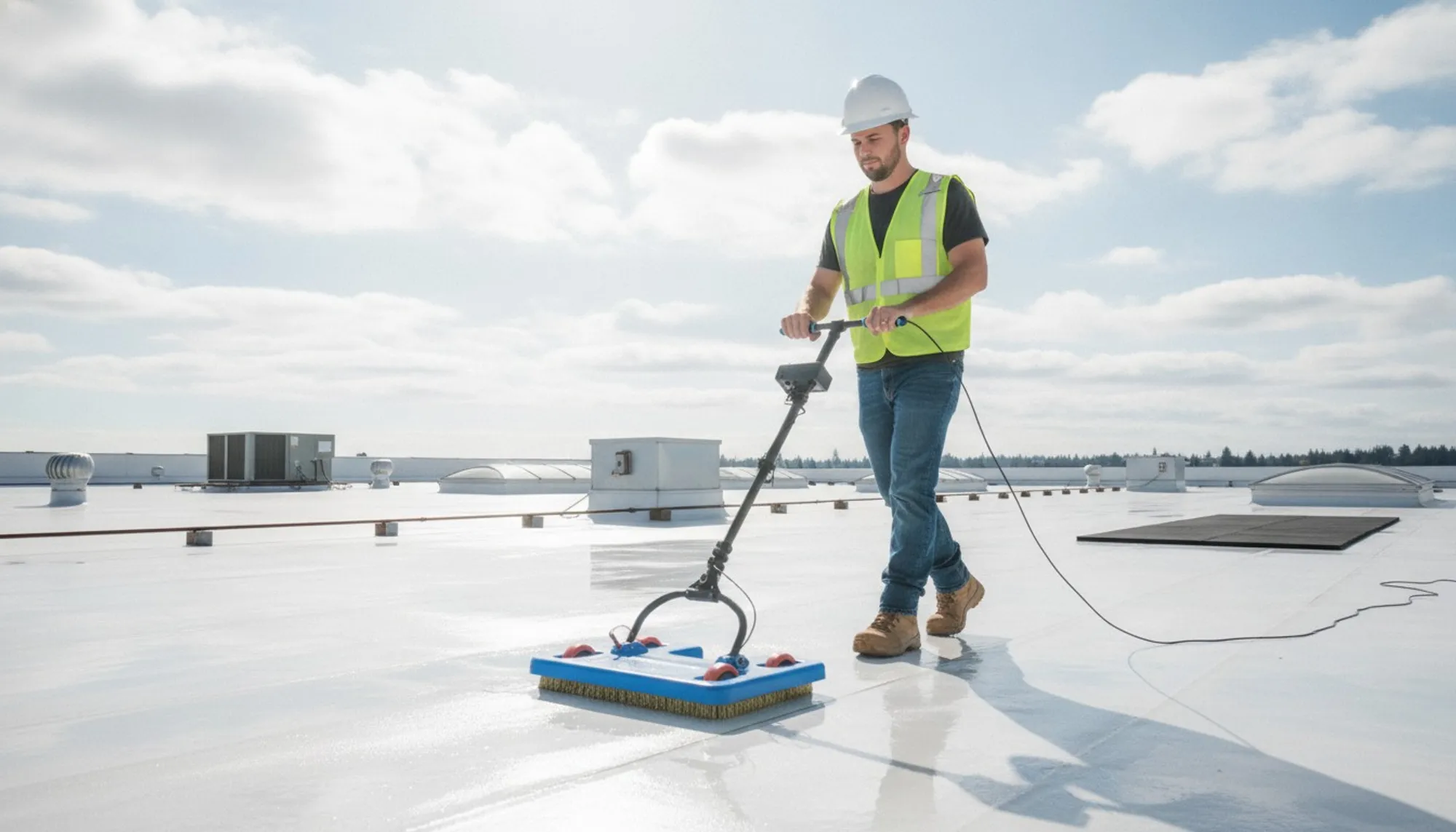
Licensed building envelope testing in Florida.
Atlantic Testing Services runs independent building envelope testing across Florida: licensed nuclear roof moisture surveys, infrared thermography, and electronic leak detection. We find the moisture or the breach and put it on a map you can hand to your contractor, because the fixing is their trade and the finding is ours.
Serving the whole state
Crews run projects anywhere in Florida, including Palm Beach, Broward and Miami-Dade.
On a large roof or a plaza deck, the testing is a small fraction of the project. What it protects is the part that is not small: the tear-off you can avoid, the warranty that holds, the claim that never gets filed.
What is not routine is finding one firm that carries all three test methods and is licensed to run the one that matters most in this climate.
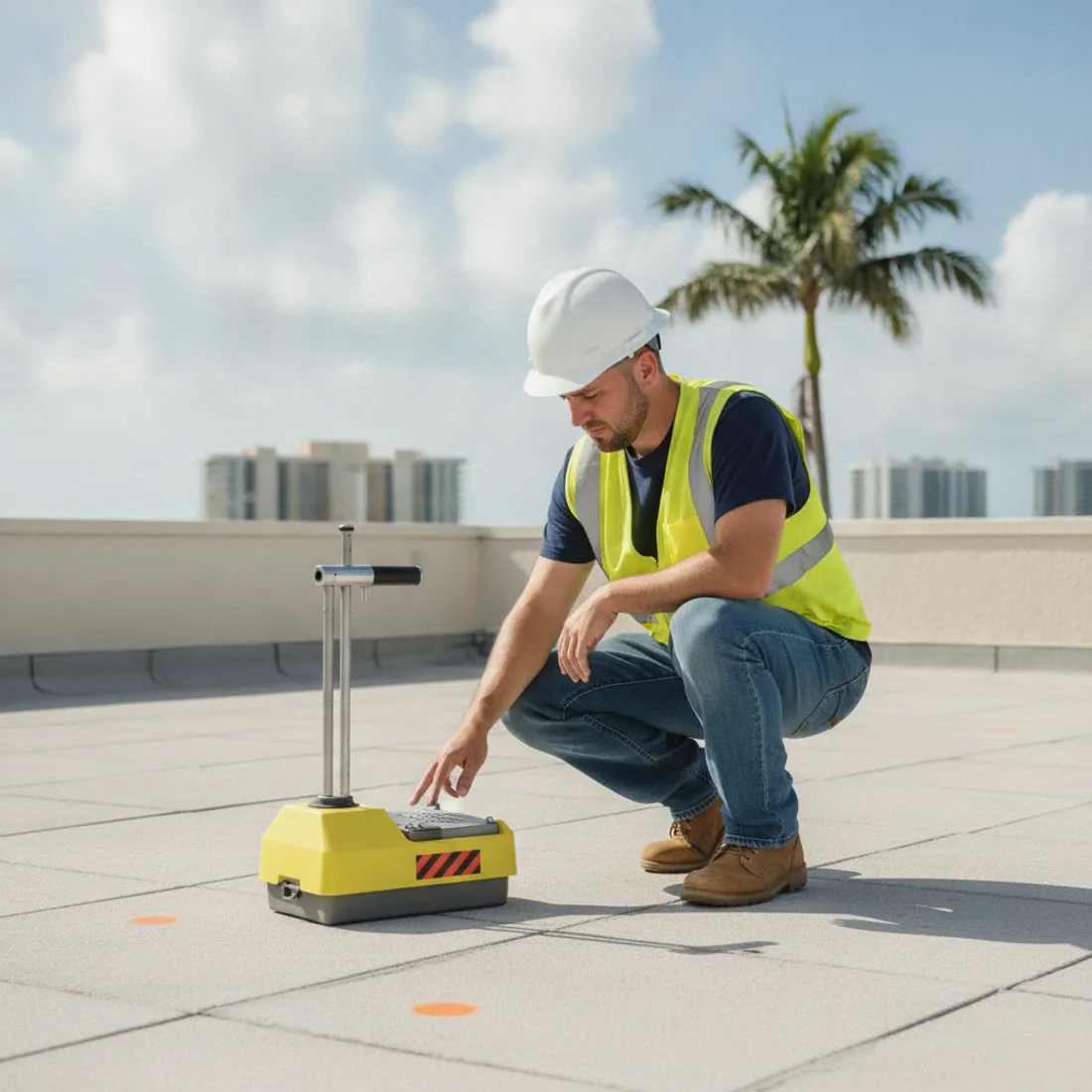
Licensed to run the nuclear gauge in Florida
A nuclear moisture gauge contains a sealed radioactive source. Operating one in Florida requires state licensing, which is a genuine regulatory barrier and not a box most testing firms have ever ticked. Of the competitors we have surveyed, only about three in eight carry nuclear at all, before licensing is even considered.
It matters in Florida more than almost anywhere, and the reason is the roofs themselves. Florida commercial roofs get recovered and storm-repaired repeatedly, and every round adds a layer. What ends up on the building is a multi-layer assembly holding moisture somewhere inside it that a thermal scan cannot read through. Ballast and pavers defeat infrared outright.
That is the case nuclear exists for. It measures moisture within the insulation even beneath added membrane, which turns a roof nobody could properly assess into a roof with a defensible moisture map. A firm that owns only a thermal camera has to work with what the camera can see.
Worth asking any agency that quotes you nuclear work in Florida one question: are they licensed to run the gauge here?
Three methods, one mobilization
Booked together they share one mobilization, the economical way to buy testing at project scale.
Finds the actual breach in a new or existing membrane, to the square inch, without flooding the structure. The close-out test on new work.
Maps what is already wet inside the assembly, in daylight, regardless of weather. Reads through surfaces infrared cannot see past.
Covers ground fast when conditions allow it. We will tell you honestly when they do not.
Verifies the barrier performs as specified while it is still exposed and can be corrected.
If you are writing the testing into a Florida job
Everything a specification needs is published: the standards, the scope language you can paste, and the qualification package. Most testing firms make you email for it. And the firm behind the reports is a member of the FRSA, the Florida Roofing & Sheet Metal Contractors Association.
We will also read a draft testing scope and tell you where it is loose enough for a low bidder to walk through, at no charge and with no obligation to name us.
Florida questions
What areas of Florida do you cover?
All of it: crews run projects statewide. On a large commercial roof or plaza deck the testing is a small fraction of the project, so distance inside Florida is never the deciding factor; the assembly is.
Are you licensed to run nuclear moisture surveys in Florida?
Yes. Nuclear surveys in Florida run under licensed, trained operators, and that is not a given in this market: most testing firms do not carry the nuclear method at all. Ask any firm quoting nuclear work whether they are licensed to run the gauge in Florida.
What does testing cost on a Florida project?
It is driven by roof or deck area, the methods the assembly needs, and mobilization. Booking nuclear, infrared and electronic leak detection together shares one mobilization, which is the economical way to buy testing, and the total is a small fraction of the tear-off or claim it protects against.
Do you do the repairs too?
No. We are consultants, not contractors: we find and document the problem, and someone else fixes it. A condo board or an insurance adjuster can rely on the report because the firm that wrote it makes nothing on the repair.
Tell us about the building
The assembly, roughly how big, where it is, and what you are seeing. We will tell you which test it needs, or that it does not need one.