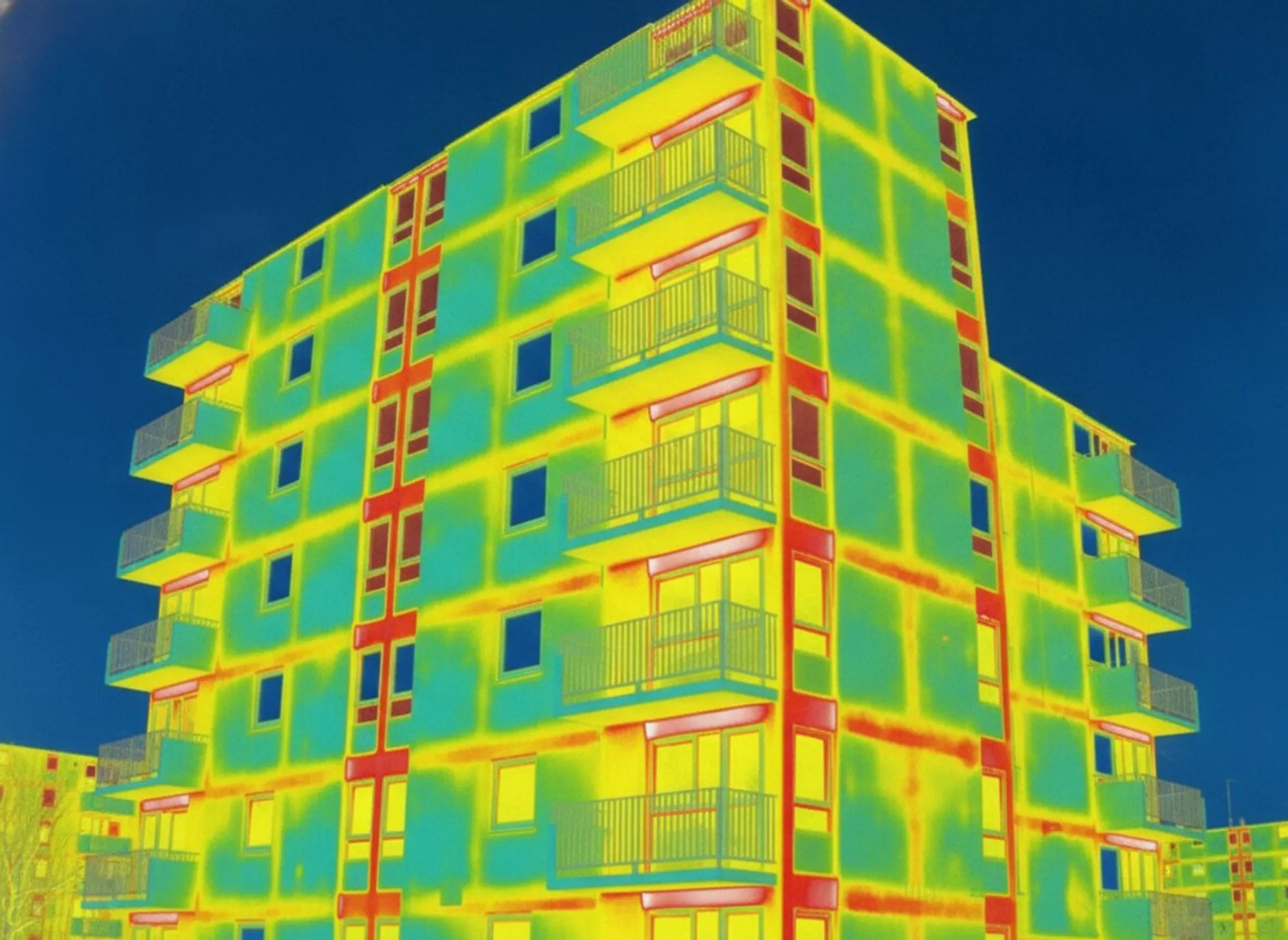
Infrared building envelope testing
Infrared building envelope testing uses a thermal camera to find what a finished wall or roof hides: missing insulation, trapped moisture, heat loss, and air moving through paths nobody designed. The camera needs warm on one side and cool on the other; given that, each defect shows as a temperature pattern on the surface and gets mapped, with nothing opened and nothing cut, so the repair goes where the problem is.
No envelope is perfect. The question is where it's failing
The envelope, meaning the walls, roof, and foundation, is built to hold temperature, keep water out, and stop outside air. Weather works on it constantly, and the failures start invisibly: an air leak at a window head, insulation that settled out of a stud bay, moisture wicking through a facade crack. The owner finds out through the heating bill, the mold call, or the ice dam.
Every one of those failures changes the surface temperature around it. That is the whole method: warm air escaping draws a plume the camera sees; a void in insulation reads as a cold patch; wet material holds heat differently than dry. The scan turns an invisible problem into a mapped, photographed, prioritized list.
The camera works by hand or by drone. Upper facades and roof lines that would need a lift for a walking scan are read by a drone flight instead, with the same thermographer interpreting the imagery.
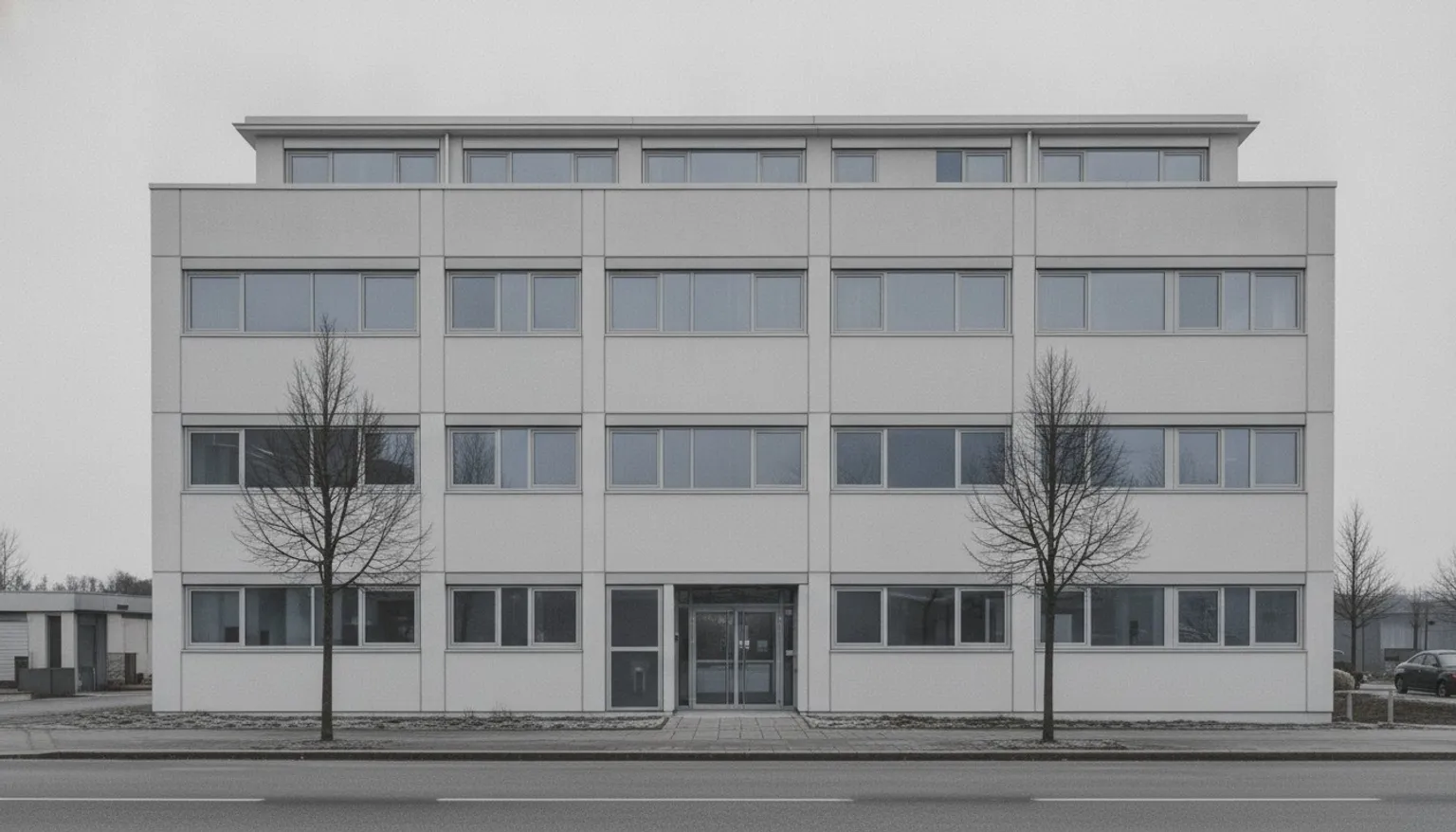
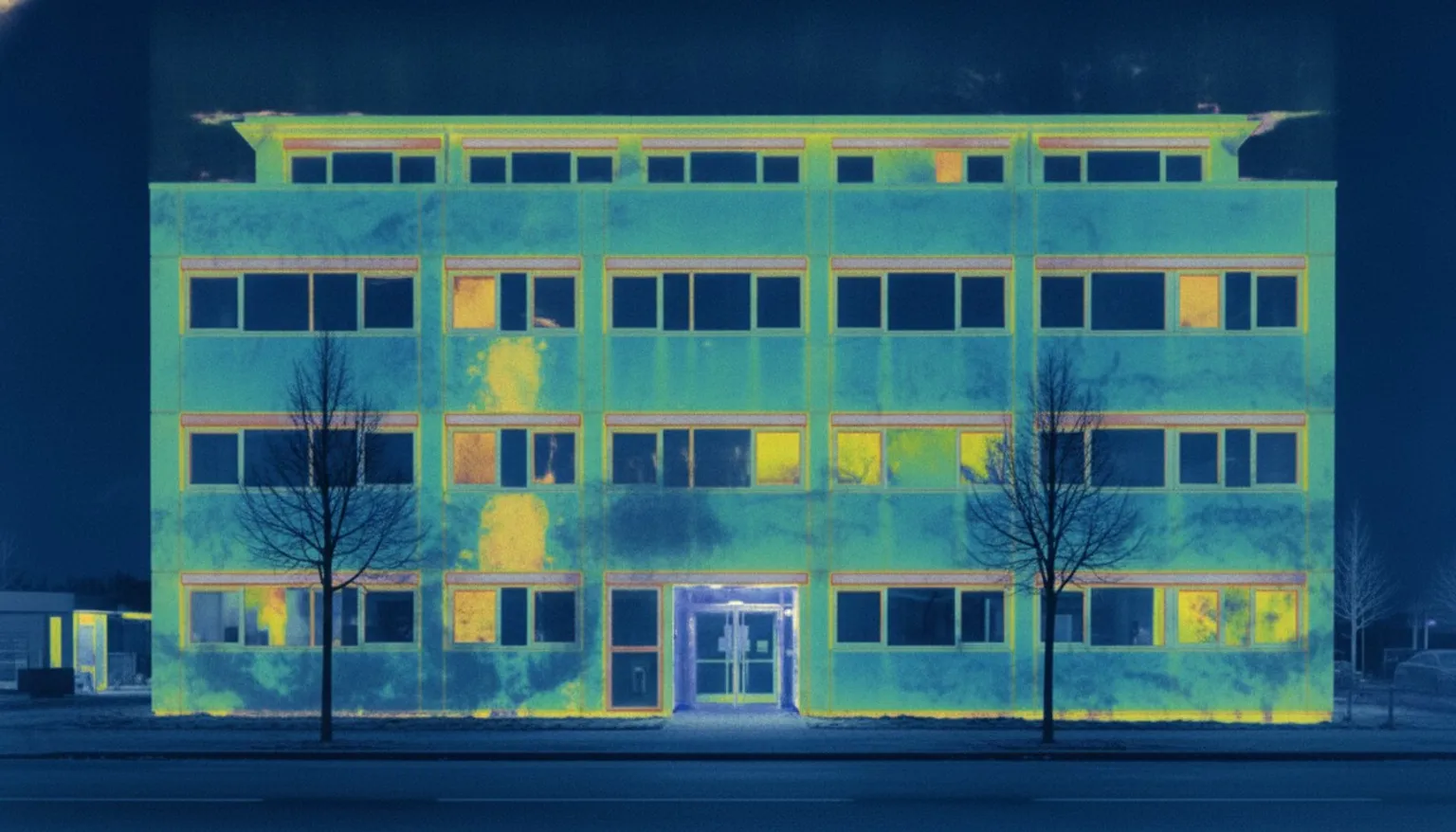
The same facade, seen in infrared
Drag the divider. The wall looks uniform in visible light; in infrared, heat loss and air leakage draw the map repairs work from.
What the scan is used for
Locate the losses
Missing insulation, heat loss, and moisture buildup, mapped area by area, so insulation and sealing money goes where it changes performance.
Pinpoint infiltration
Exact air infiltration paths and the moisture patterns behind mold growth, ice dams, and frozen pipes. The cause gets found, not guessed.
Plan the upgrade
Documented existing conditions for energy-efficient renovation planning, heating and cooling cost reduction, and LEED credit strategies.
How the test is actually performed, step by step, and how it fits with the other envelope methods, is covered in How is a building envelope test performed? For wet roof insulation specifically, the dedicated tool is a roof moisture survey; for air barrier membranes under construction, see air vapor barrier testing.
The scan, and what rides along with it
The infrared diagnostics are performed by certified thermographers. Some specifications also call for a blower-door test alongside the scan, because pressurizing the building exaggerates the leakage paths, so the project gets a quantified leakage number and the thermal images that show where. When a spec asks for both, both get delivered. And the report comes from consultants, not contractors: it says what was found, with no repair bid behind it.
Deliverable: a thermal map of the envelope with each anomaly imaged, located, and explained: the document your consultant, contractor, or energy engineer works from.
What owners and consultants ask
What does an infrared envelope scan actually find?
Missing or settled insulation, air infiltration paths, moisture trapped in walls or roof assemblies, thermal bridging, and the heat-loss patterns behind ice dams and frozen pipes. Each shows as a distinct temperature signature the camera reads through the finished surface. Nothing is opened or cut.
When is the best time to scan a building envelope?
When there is a solid temperature difference between inside and out; the bigger the differential, the more clearly defects show. In the Northeast that makes heating season prime time for wall and facade scans; roofs are surveyed on their own schedule at dusk after a warm day.
Do you do blower door or whole-building air leakage testing?
Blower door work is sometimes part of an envelope test scope: a specification pairs it with thermal imaging when the project needs a quantified leakage number as well as the locations. When your spec calls for both, the project gets both; the infrared diagnostics are what our certified thermographers perform.
Can the scan support LEED or an energy retrofit?
Yes. The thermal map shows where insulation and air-sealing money will actually change performance, documents existing conditions for energy-upgrade planning, and supports LEED credit strategies.
Tell us about the building
What it is, roughly how big, and what you're chasing: a heating bill, a moisture problem, a retrofit plan. We'll tell you what a scan will and won't answer before you spend anything.