Restoration Contractors
Water does not stay where it entered. By the time you are called, it has run along a deck, tracked through insulation, and shown itself somewhere that has nothing to do with the source.
Scope it too small and you are back in six months with the same building and a harder conversation. Scope it too large and you are defending a number to an adjuster who has every reason to challenge it. Either way, what settles it is a map of where the moisture is, made by someone who is not doing the remediation.
What we run for you
Infrared roof moisture surveys
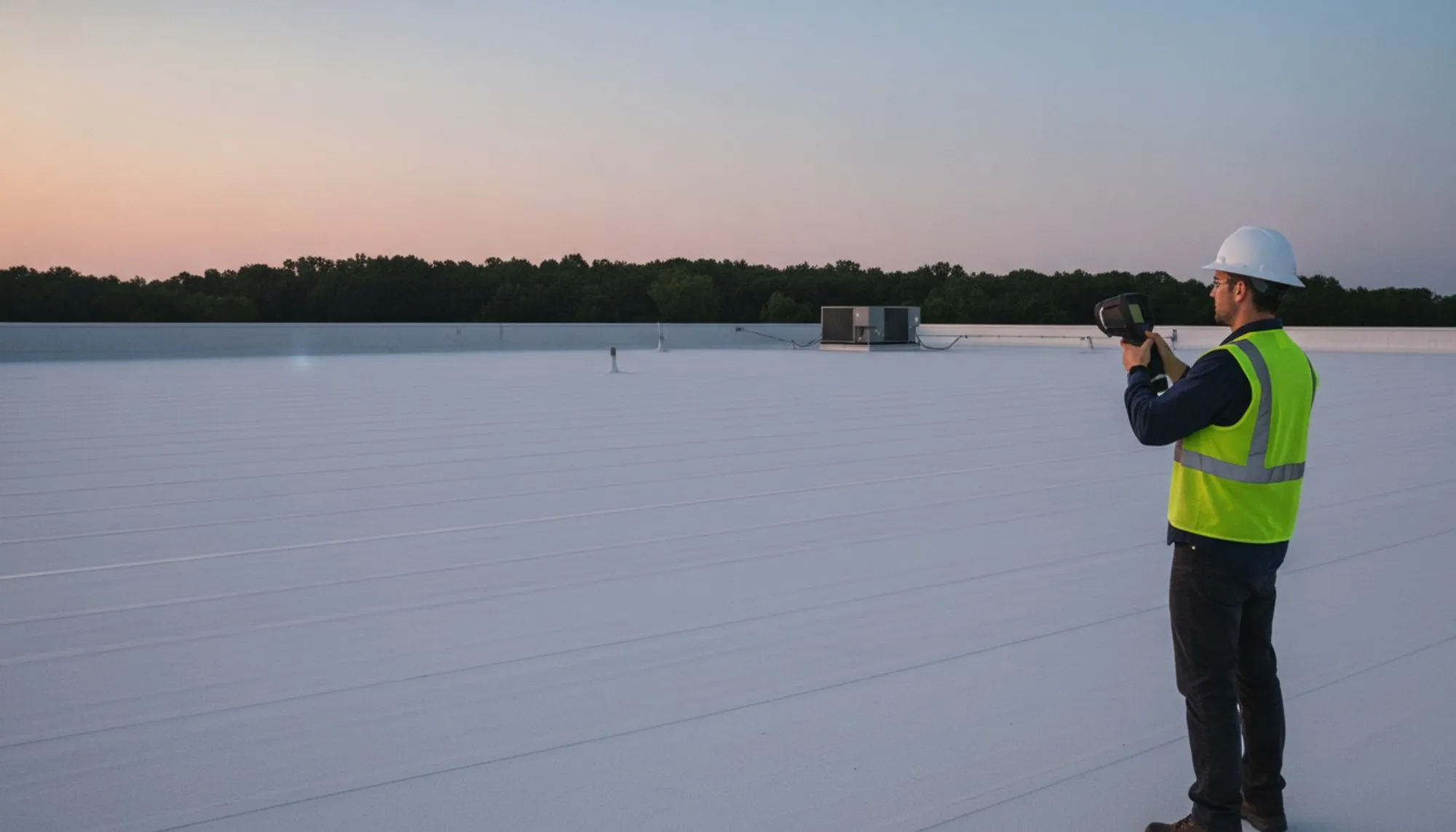
Reads the whole roof after sunset and shows the extent of saturation, so the scope follows the damage rather than the estimate.
Nuclear roof moisture surveys
Reads through ballast and overlays in any weather, which matters when the schedule cannot wait for a clear night.
Electronic leak detection
Finds the breach itself, so the repair addresses the entry point and not only the damage it caused.
What you get
A drawing with wet and dry areas delineated and each reading logged. It is the document that supports a scope to an adjuster, and the one that proves the work was sized correctly afterwards.
Moisture extent is documented by instrument reading at marked points, in a report format an adjuster can check rather than take on trust.
Questions we hear from restoration contractors
How do you establish how far the water travelled?
Infrared reads the roof or assembly surface for the thermal signature of retained moisture; nuclear reads moisture content through the assembly at marked grid points. Together they draw the boundary between wet and dry on a plan.
Will the documentation stand up to an adjuster?
It is built for that reading. Instrument readings at marked locations, drawn boundaries, photographs. A scope supported by measurements, produced by a firm doing none of the remediation it supports.
The schedule cannot wait for a clear night. Can you still survey?
Yes. Infrared needs the right evening conditions, but nuclear reads in daylight and most weather, which is usually the answer when the timeline is the constraint.