Architects & Engineers
Writing testing into a specification is straightforward until you have to say which test, to which standard, performed by whom, and at what point in the sequence. Get any of those wrong and the requirement either fails to bind or specifies something the assembly cannot support.
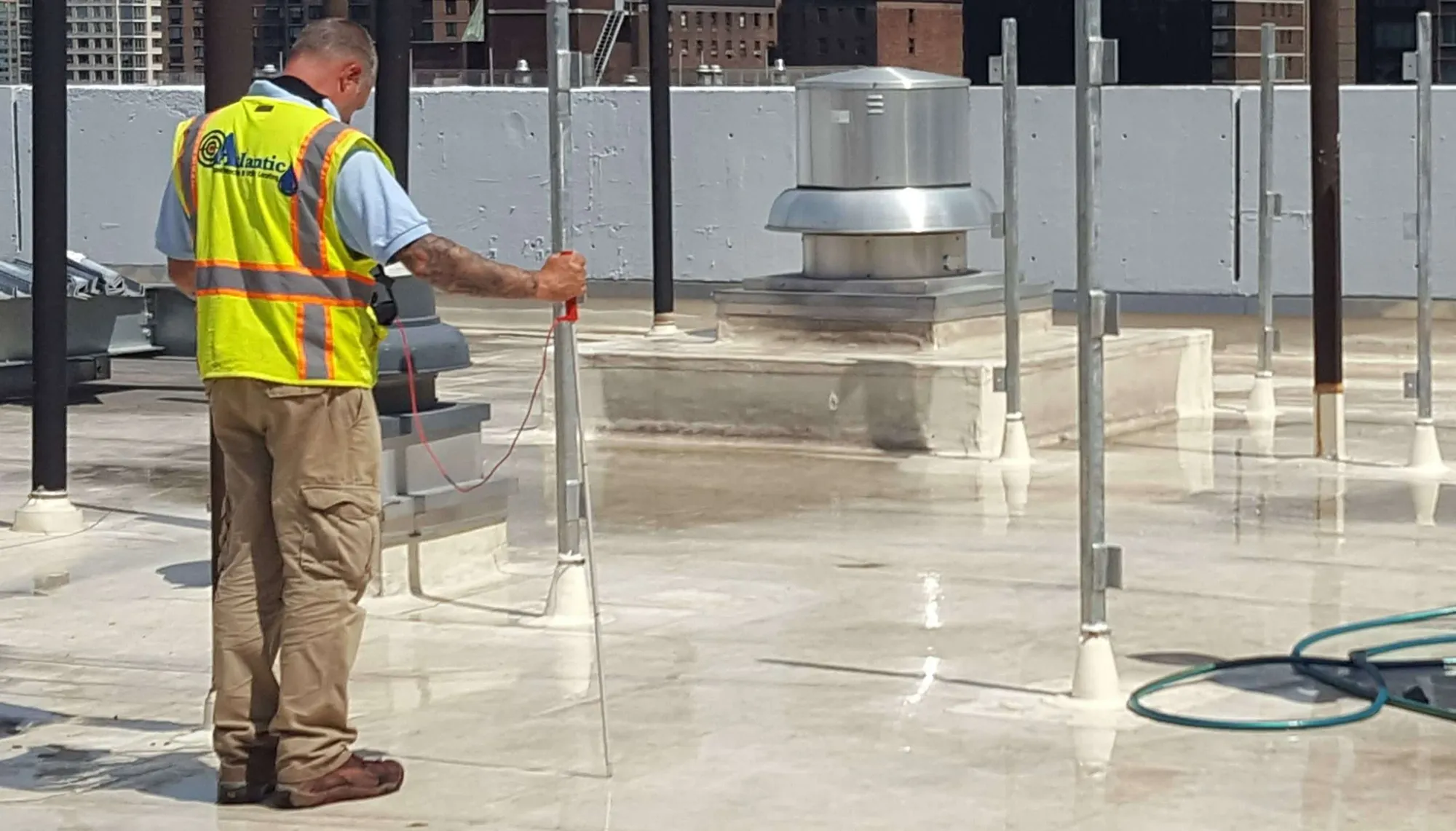
Electronic leak detection has two families with different requirements, ASTM D7877 and D8231 govern different things, and the timing relative to overburden is not optional. A specification that says "leak test the membrane" leaves all of that to be argued on site.
What we run for you
Specification resources
Scope language, standards, registration numbers and coverage in one place, published rather than sent on request.
Test & material specifications
The standards each test runs to, and what each one is capable of answering.
Electronic leak detection
What the method requires from the assembly, so the spec asks for something the roof can actually deliver.
Air & vapor barrier testing
The one window in the construction sequence when the barrier is testable, which the spec has to name.
What you get
Language you can drop into a project manual, and a firm that carries every method in house, so the recommendation is not shaped by which instrument we happen to own.
The tests specify to ASTM D7877 and D8231 for leak detection and ASTM E1186 and D4541 for barriers. Those are the same numbers your project manual will carry.
Questions we hear from architects & engineers
What language actually binds in a testing spec?
Name the method and the standard: electronic leak detection per ASTM D7877 and D8231, barrier testing per E1186 and D4541, and the point in the sequence when each runs. "Leak test the membrane" without a standard leaves the method to whoever bids lowest.
When in the sequence should each test land?
Barriers: after installation, before cover. Membranes: at completion, before overburden. Both timings exist because the test either requires access the next trade removes, or requires conditions the next layer destroys.
What should we require from the testing agency?
Independence from the installer, the standards in writing, and qualifications you can check. Our thermographers are Infraspection Level II minimum, and our registrations and coverage are published on the specification page rather than sent on request.