Developers
A strike stops the job, and not for an afternoon. It stops for however long it takes to get the utility owner out, agree who pays, repair the line, and restart a sequence that had every other trade stacked behind it.
On a site with any history, the drawings are incomplete by definition. Previous owners added services, removed buildings, abandoned lines in place and recorded none of it. That is the ground the excavator is about to open.
What we run for you
Underground utility locating
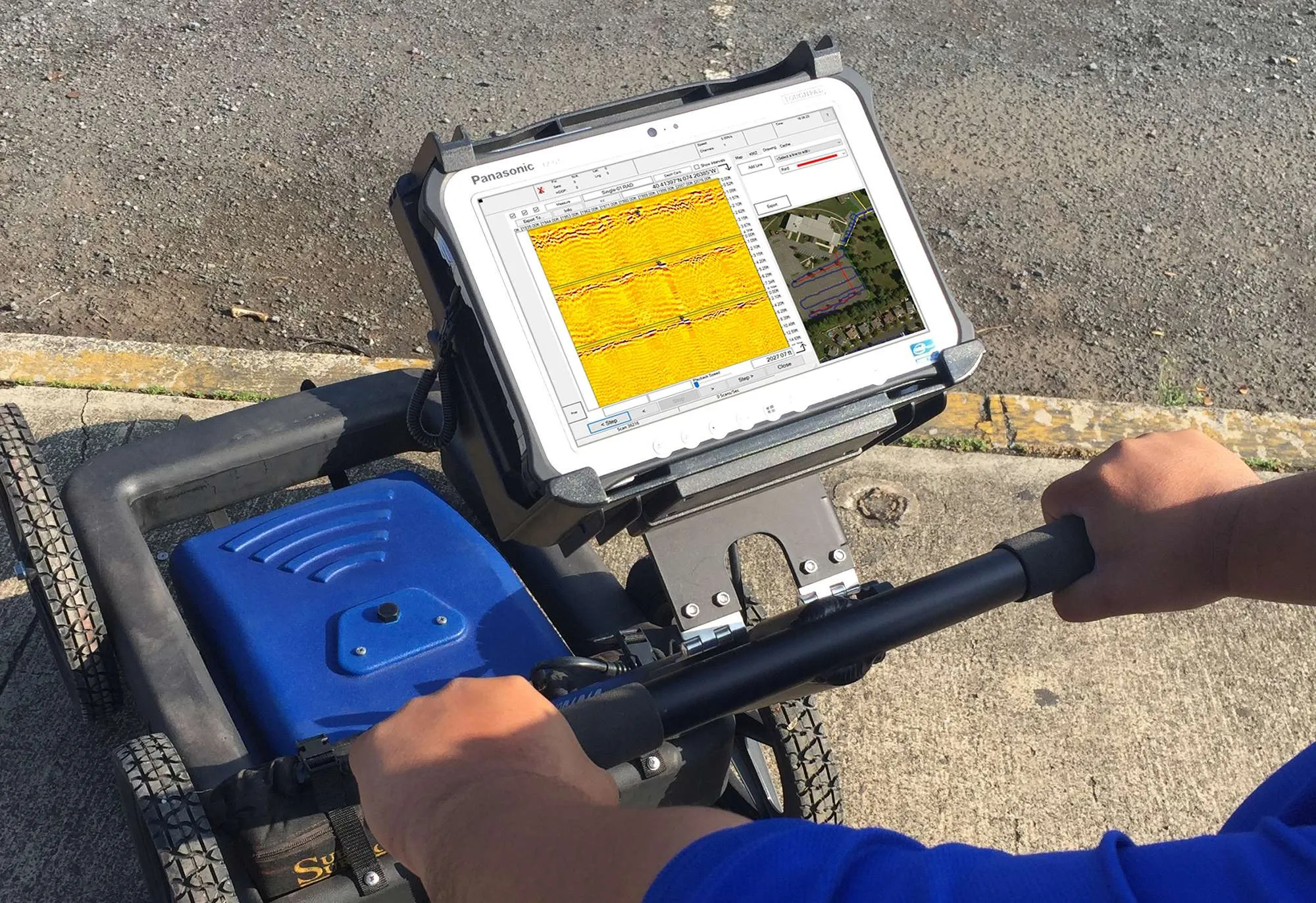
Private lines located and marked before excavation, including the ones no drawing shows.
Utility mapping
Findings compiled into site drawings that survive the project and inform the next phase.
Concrete imaging & scanning
Rebar, post-tension and conduit located before coring or cutting a slab.
What you get
Marks on the ground and drawings for the file, produced before the dig rather than after the strike.
One-call marks utility-owned lines to the service point. Everything past it on a development site is private, and shows up only if someone locates it.
Questions we hear from developers
The site drawings show the utilities. Why locate?
Drawings show what someone once recorded. Sites accumulate services across owners: added lines, abandoned lines, removed buildings. Almost none of it gets documented. The excavator finds the difference between the drawing and the ground.
What does a utility strike actually cost?
The repair is the small part. The stop-work, the utility owner's response, the investigation and the resequencing of every trade behind the excavation are the real bill, and none of it is in anyone's budget.
Can findings go onto our site drawings?
Yes. That is the mapping service: located utilities are compiled into drawings that carry through design and construction, so each phase inherits the record instead of rediscovering it.