Subsurface locating
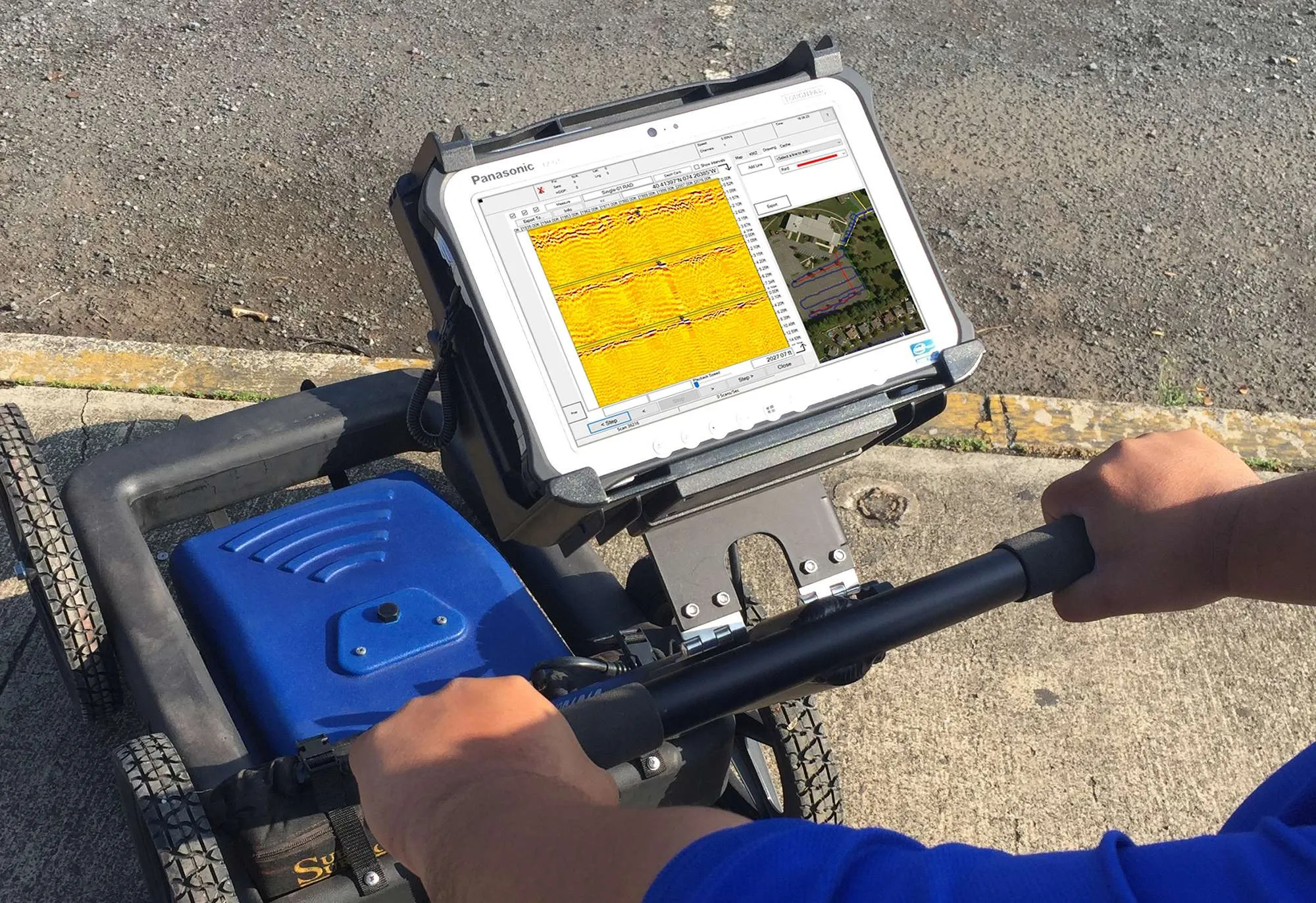
Subsurface locating finds what is buried or embedded before you dig, core or cut into it. That covers utilities and piping, tanks, rebar and post-tension cables, voids, and leaking water mains: located with ground-penetrating radar and electromagnetic equipment, marked on the surface, documented in a report. The detection is independent, and no excavation work is sold with it.
Which one your job needs
Utility locating
Buried lines, conductive and non-conductive, traced and marked before ground is broken: where they run, roughly how deep, and where they cross the planned dig. Covers the private side of the property, the part the 811 one-call markout does not touch. See private locating vs 811.
Utility mapping
The locate, made permanent: detected utilities compiled into site drawings an engineer or owner can design and plan from, instead of surface paint that washes away.
Concrete scanning & imaging
GPR through slabs, walls and decks: rebar, post-tension cables, conduits and voids located up to 18 inches deep, from one side, before the drill or saw finds them the hard way.
Water main leak detection
A main losing water underground announces itself only on the bill. Acoustic and electronic diagnostics narrow a buried leak to a documented indication zone, so the excavation starts where the evidence points instead of trench-hunting the whole run.
Atlantic belongs to the industry's own damage-prevention bodies: the National Utility Locating Contractors Association (NULCA) and the Common Ground Alliance (CGA), the organization behind the 811 program.
Locating questions
What is subsurface locating?
Finding and marking what is hidden underground or inside concrete (pipes, conduits, cables, tanks, rebar, post-tension tendons, voids and leaks) using ground-penetrating radar (GPR) and electromagnetic locating equipment, before anyone excavates, cores, or cuts into it.
Doesn’t calling 811 cover this?
Only partly. The 811 one-call service marks public utilities up to where they enter your property. Everything past that point, the private side, which on a commercial site is most of what is buried, is the owner’s problem and is what private utility locating exists for. The full comparison is on private locating vs 811.
Is a locate a guarantee that nothing is there?
No, and a firm that says otherwise is overselling. Utility locating is a risk-reduction service: we document detected utilities based on the signals available and site conditions on the day, mark them on the surface, and report what we found. It turns digging blind into digging informed.
Tell us what's being dug, cored, or cut
The site, what the trades are about to do, and any drawings you have, even old ones. We'll tell you which locate the job needs and what we can rule in before anyone breaks ground.