Impedance roof moisture surveys
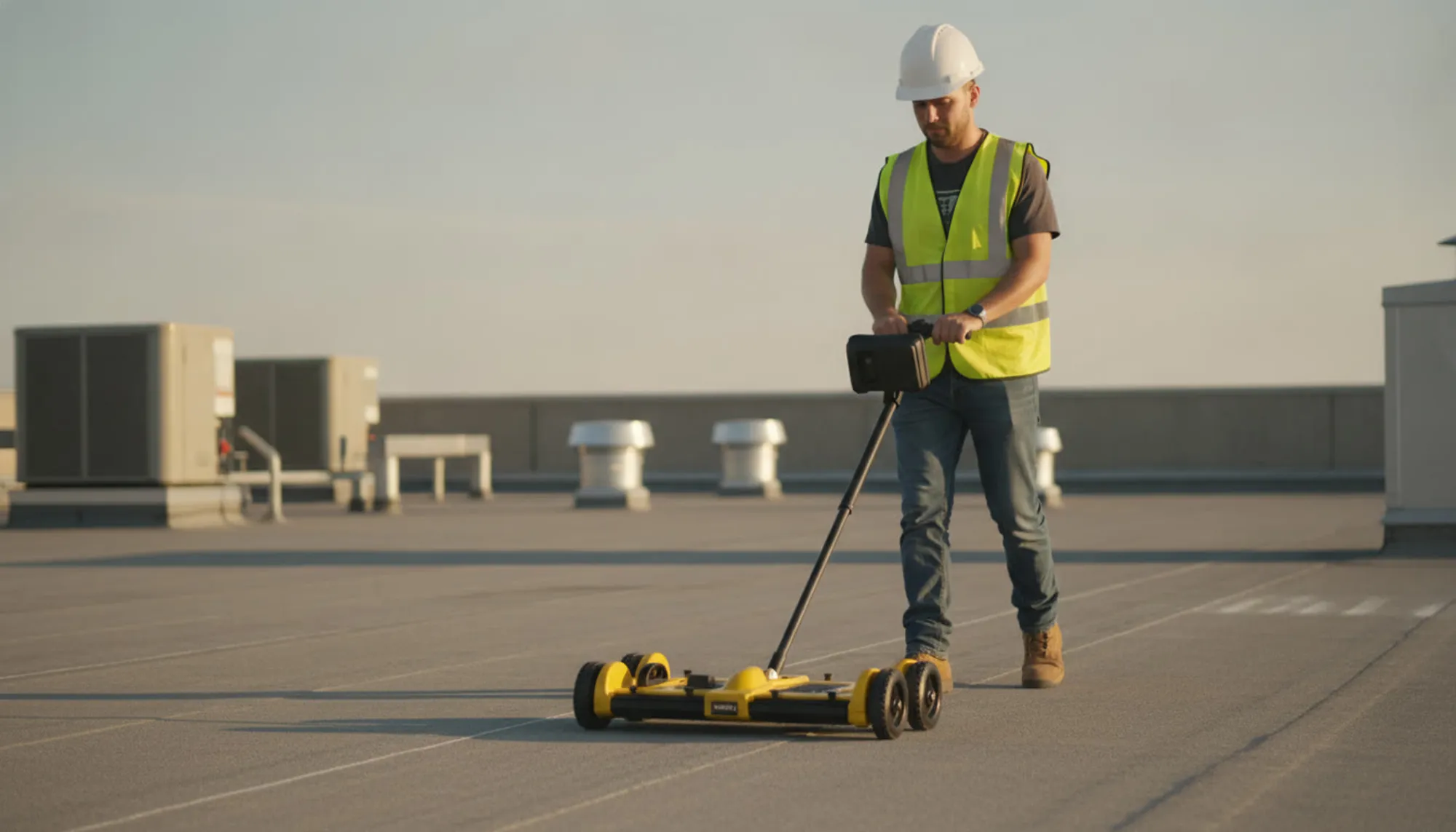
An impedance survey maps the moisture in a roof assembly with an electronic scanner read directly on the membrane. Where water sits in the assembly, the signal's impedance drops, and readings taken on a grid across the roof become a moisture map. It runs in daylight and ordinary weather to ASTM D7954, needs no radioactive source and no thermal window, and cuts nothing open. All it asks of the roof is a surface dry enough to read.
When you need this
The question is the same one every moisture survey answers: how much of this roof is actually wet, and where does the wet stop? What differs is the circumstances. An impedance survey earns its place when the schedule cannot wait for an infrared window (the dusk scan needs a sunny day, a dry membrane and a clear evening) and when the job does not warrant the radiological logistics of a nuclear gauge.
That makes it the practical choice for verification scans during a re-roof, quality checks on a suspect area, delineating the edges of a known leak before repairs are priced, and surveys that must happen on the day the crew is mobilized, whatever the weather did yesterday.
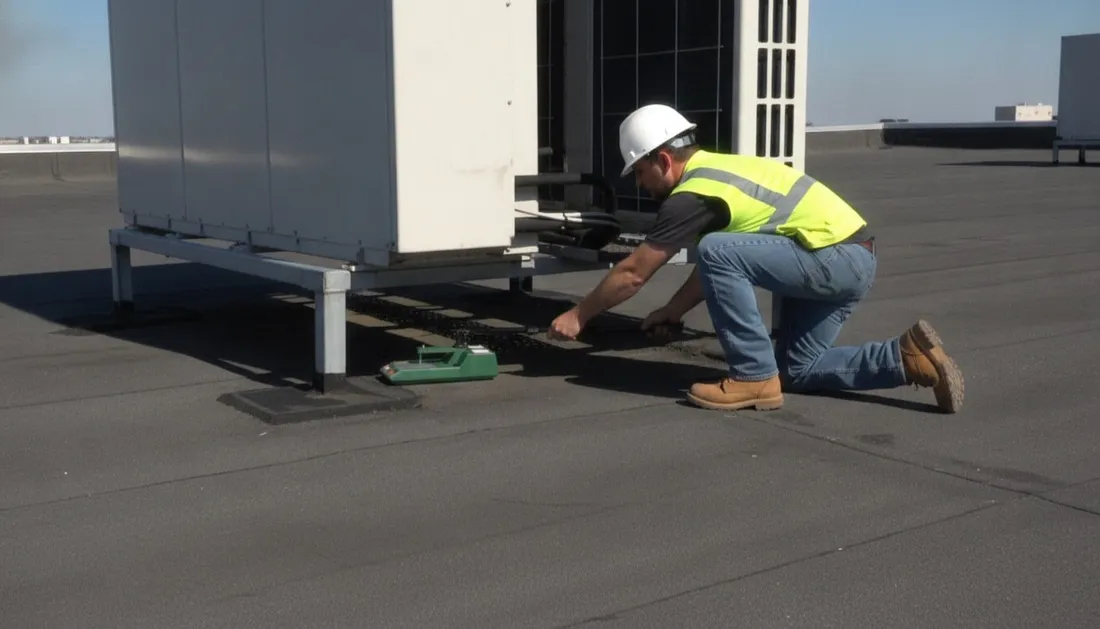
Grid readings, on the membrane, in daylight
- The roof is laid out on a grid, the same discipline as a nuclear survey: comparable readings at regular stations across the whole roof, not a scatter of spot checks.
- The impedance scanner is read at each station, directly on the membrane. A low-frequency signal penetrates the assembly; moisture raises its conductivity, and the instrument registers the drop in impedance.
- Elevated readings are investigated, their boundaries traced, and the wet areas marked on the roof surface.
- You receive a marked roof plan with wet and dry areas delineated: a document an owner, a board, or an adjuster can price repairs from.
Impedance, infrared, or nuclear
We run all three methods, so the recommendation follows the roof.
| Impedance | Infrared | Nuclear | |
|---|---|---|---|
| When it can run | Daylight, ordinary weather, dry surface | Clear evening after a sunny day, dry membrane | Daylight, any weather |
| Best on | Smooth, clean, exposed membranes | Large exposed roofs (fastest coverage per visit) | Multi-layer assemblies, ballast, pavers, overburden |
| Reads through overburden | No | No | Yes |
| Licensing required | No | No | Yes (state radioactive materials license) |
| Governing standard | ASTM D7954 | ASTM C1153 | ANSI/SPRI/RCI NT-1 |
The full infrared-versus-nuclear argument is on its own comparison page. Tell us the assembly and what is on top of it, and we will tell you which of the three the roof needs.
Impedance survey questions
What is an impedance roof moisture survey?
A moisture survey performed with a low-frequency electronic scanner rolled or placed directly on the membrane. The instrument sends a signal into the roof assembly and reads its electrical impedance, which drops where moisture is present. Readings taken on a grid across the roof build a moisture map, with no radioactive source, no thermal window, and nothing cut open.
When is impedance the right method instead of infrared or nuclear?
Impedance runs in daylight, in ordinary weather, on the crew’s schedule, so it fits jobs an infrared survey window will not, without the licensing a nuclear gauge requires. It reads a smooth, clean, dry membrane best. It does not read through ballast, pavers or standing water, and on a heavily layered roof a nuclear survey remains the deeper-reading tool. We run all three, so the method is matched to the roof rather than to the equipment we happen to own.
Is there a standard for impedance moisture surveys?
Yes: ASTM D7954, the standard practice for moisture surveying of roofing and waterproofing systems using non-destructive electrical impedance scanners. If your specification calls for a D7954 survey, this is that test.
What does an impedance survey cost?
The drivers are roof area, the reading-grid density the job calls for, and mobilization. Like the other moisture survey methods, it costs a small fraction of the tear-off decisions it informs.
Tell us about the roof
The assembly, roughly how big, what is on top of it, and what you are seeing. We will tell you which moisture survey the roof needs, whether impedance, infrared, or nuclear, and when we can be there.