Insurance & Risk Management
Underwriting an electrical system on a schedule of equipment tells you what is installed. It does not tell you what is failing.
A thermal survey does, and it produces something a file can hold: a dated record of measured condition, per component, taken while the system was under load. For a risk manager that is the difference between a recommendation and a finding.
What we run for you
Infrared electrical inspections
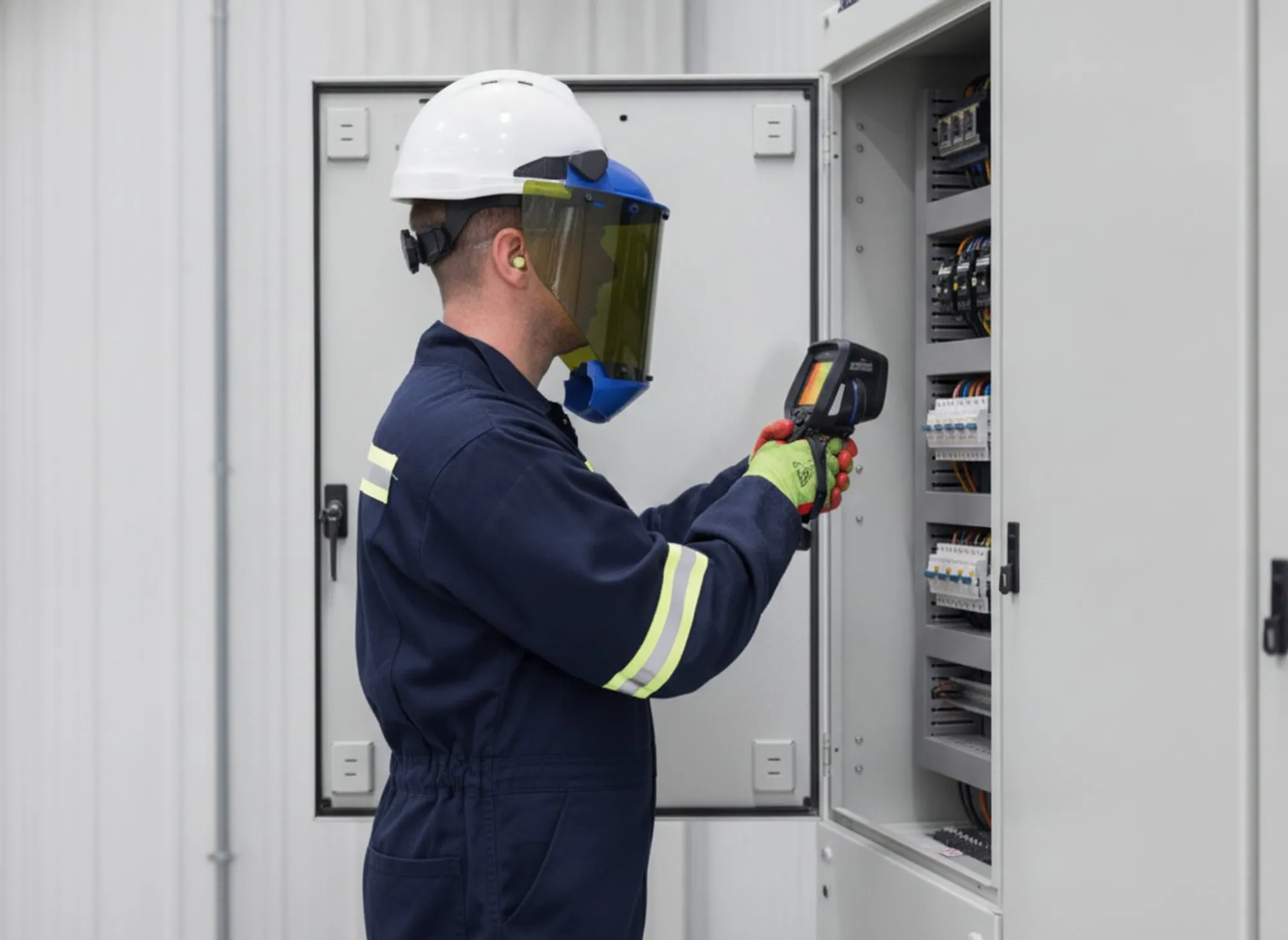
Surveys performed by Infraspection Level II minimum thermographers, several Level III, with each anomaly measured rather than described.
Infrared mechanical inspections
Extends the same evidence to rotating and mechanical plant.
Infrared roof moisture surveys
Establishes roof condition on a portfolio before a claim rather than during one.
What you get
A report per site with every finding located, imaged and measured. It is independent because we perform no remediation and have nothing to gain from the severity of what we find.
Thermographic surveys follow NFPA 70B, and every finding is a measured temperature, not an adjective. We perform no remediation, so severity is reported, never sold.
Questions we hear from insurance & risk management
Why require thermographic surveys on insured properties?
Because electrical failure is a leading commercial loss cause, and its precursor, a connection heating under load, is invisible to every inspection except a thermal one. The survey converts unknown condition into a documented finding before it converts into a claim.
What makes the report usable for underwriting?
Findings are measured, not described: component, location, temperature, image. And the firm producing them performs no remediation, so severity is never inflated by the party who would profit from it.
Can surveys run across a portfolio?
Yes: same method, same report format per site, which is what makes results comparable across buildings and years. Infrared and nuclear survey work runs nationwide.