Solar EPCs & Asset Owners
An array that is underperforming looks exactly like an array that is performing, from the ground and from the monitoring portal. Production is down a few percent and the reason is distributed across thousands of cells.
Thermal imaging separates them. A failed cell, a bypass diode that has gone, a connection heating up in a combiner. Each has a signature, and each is a specific component you can replace rather than a percentage you absorb.
What we run for you
Infrared solar panel testing
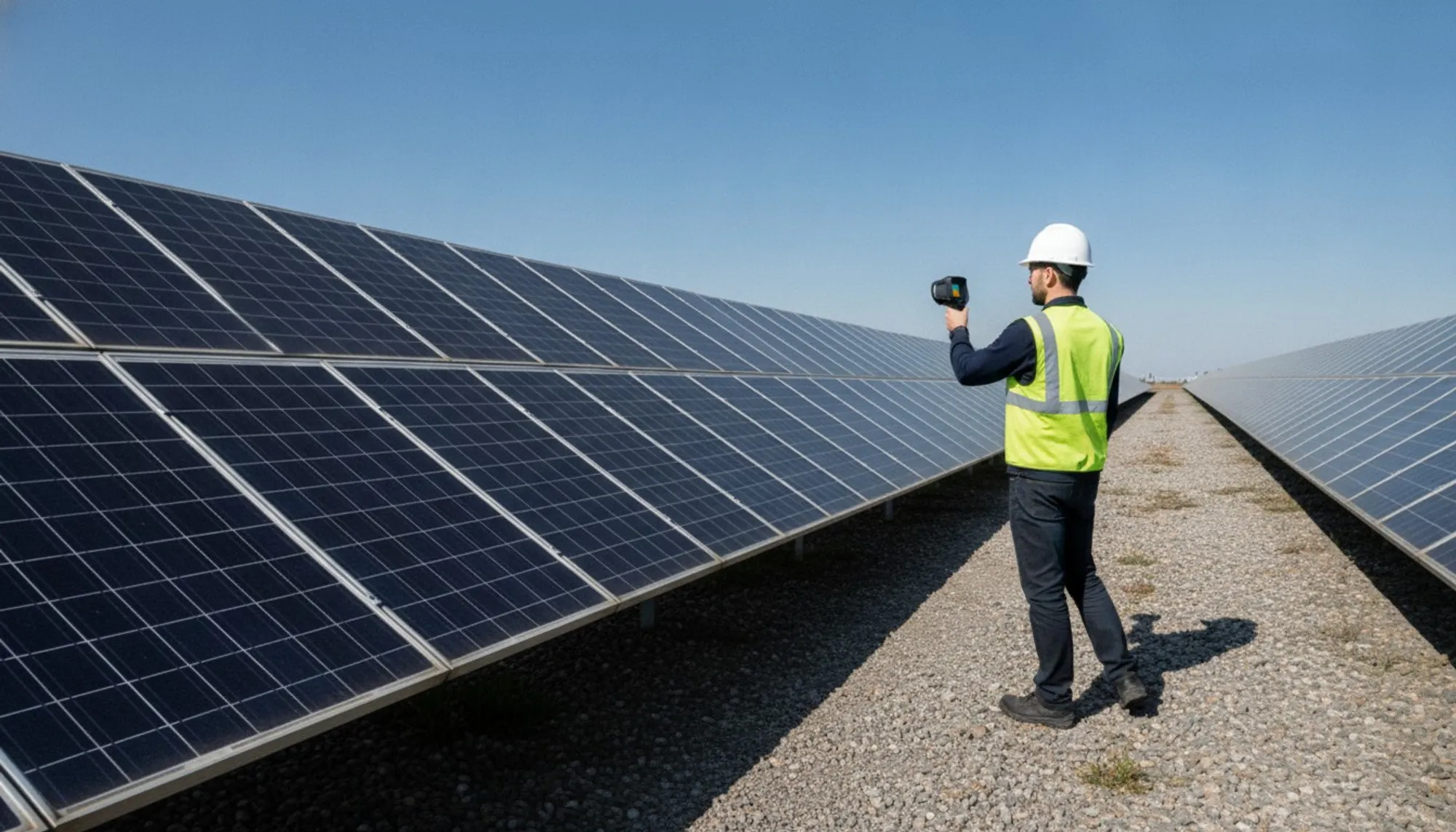
Arrays scanned under load to locate hot cells, failed diodes and connection faults down to the individual module.
Infrared electrical inspections
Combiners, inverters and the distribution side, where the loss is often not in the panels at all.
What you get
Findings located to the module with thermograms and measured temperatures, which is a punch list for a warranty claim or a maintenance visit.
Arrays are scanned under load, module by module, because a fault that is invisible at the inverter is visible as heat at the panel.
Questions we hear from solar epcs & asset owners
Production is down a few percent. Can you find why?
That is the survey's job. A thermal scan under load reads every module, and failed cells, dead strings, bypass diodes and hot connections each show a distinct signature, locating the loss to components instead of leaving it a percentage.
Do you scan just panels, or the whole system?
The system. Combiners, inverters and the distribution side get scanned as well, because the loss is often not in the array at all.
Is this worth doing on a new array?
A baseline scan at commissioning catches installation faults inside the warranty window and gives every later survey something to compare against. It is cheapest exactly when it seems least necessary.