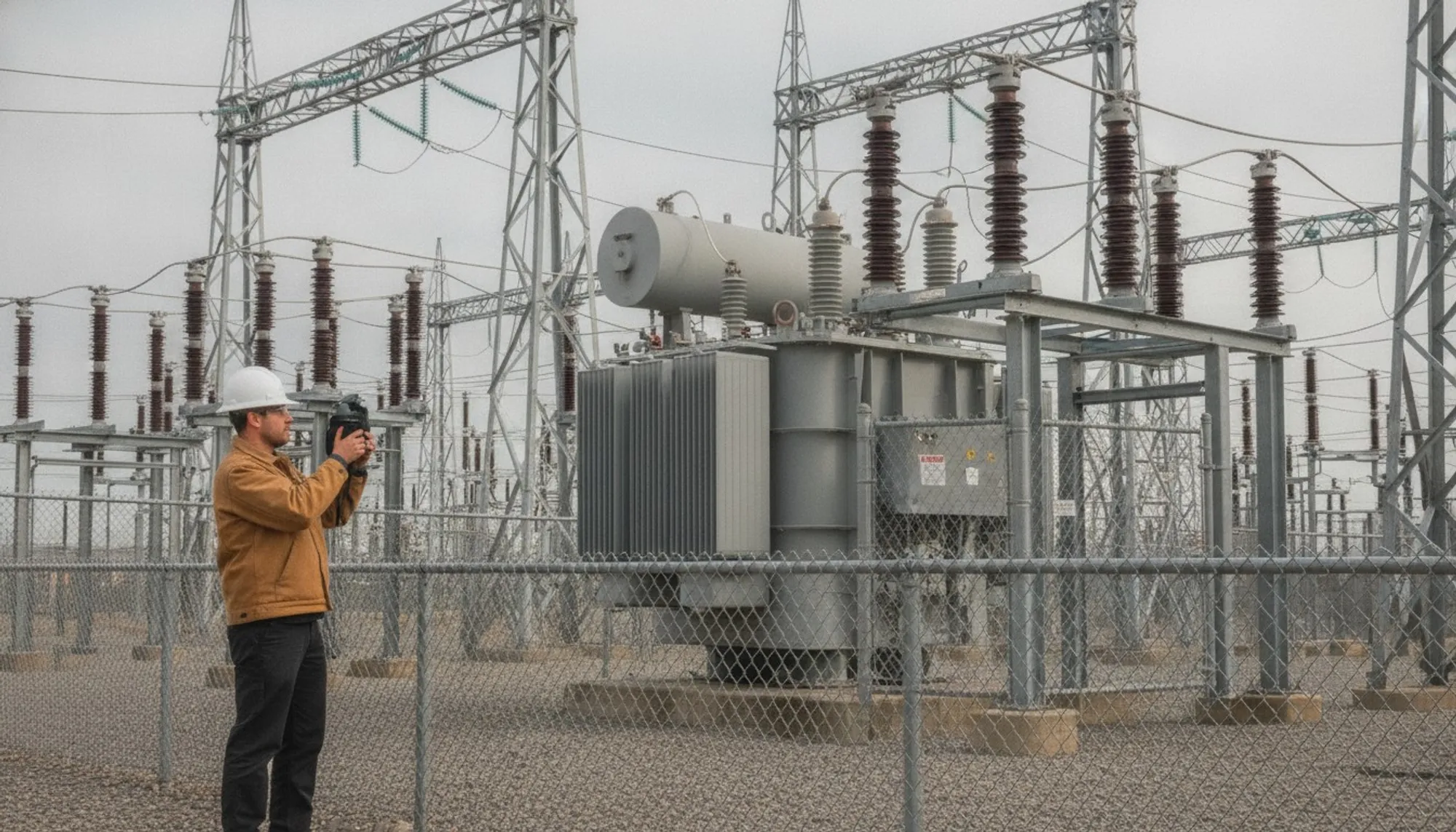
Power & Utility Companies
The failures that matter are invisible until they are not. A connection runs hot for months, resistance climbs, and the first outward sign is an outage, an arc flash, or a component that has already destroyed itself and taken the schedule with it.
Scanning under load is the only way to see it, which means the survey has to happen while the equipment is energized and working. It also has to be done by someone qualified to interpret what the camera shows rather than simply point it.
What we run for you
Infrared electrical inspections
Substations, switchgear, transformers and distribution equipment surveyed under load, from a safe standoff, by Infraspection Level II minimum thermographers.
Infrared mechanical inspections
The rotating and mechanical plant alongside the electrical, where a failing bearing shows the same way a failing connection does.
What you get
Each finding documented with its thermogram, a control photograph, the measured temperature and its location, so repair can be prioritized by severity rather than by whoever shouts loudest.
Surveys follow NFPA 70B, the electrical maintenance standard, performed by Infraspection Level II minimum thermographers, several Level III.
Questions we hear from power & utility companies
Does the equipment have to be shut down for a survey?
No. The opposite, in fact: thermal survey only works under load, because the heat signature of a failing connection exists only when current flows. Scanning happens from a safe standoff with everything energized.
What qualifications do the thermographers hold?
Every thermographer is Infraspection Level II at minimum, several Level III. The instrument is the easy part; reading what it shows on energized distribution equipment is the qualification.
How often should substations be scanned?
NFPA 70B treats thermography as periodic maintenance, and annual is the common cycle, and critical or heavily loaded equipment gets scanned more often. The practical answer: on a schedule, not after a failure.