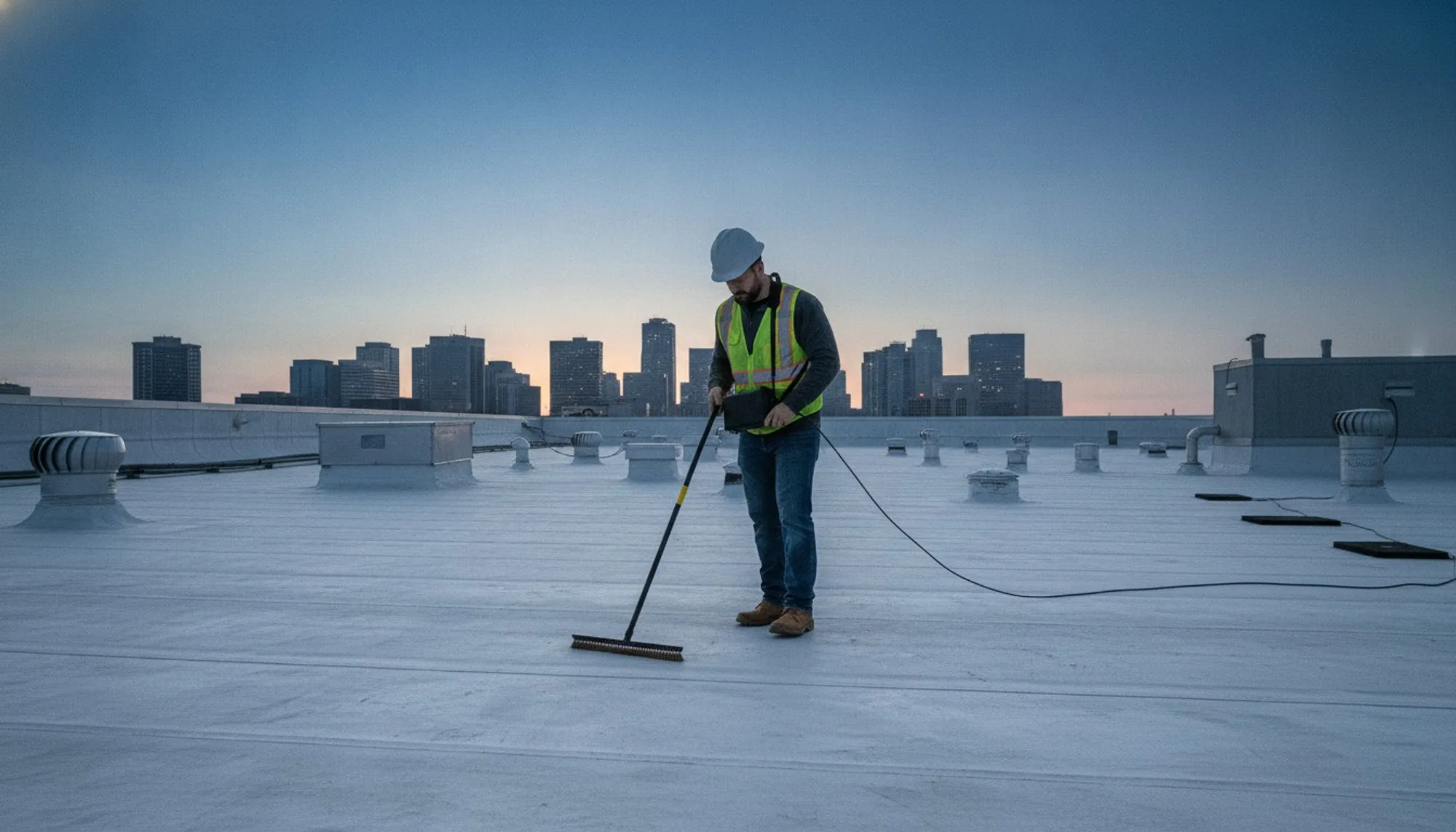
High voltage leak detection
High voltage leak detection is the dry electronic test. A technician sweeps the membrane with a conductive brush, and the instrument registers every breach and thin spot it passes over, down to pinholes that have not leaked yet. No water touches the surface at any stage, so it reaches what water-based testing cannot: vertical surfaces, details, and roofs that must stay dry.
When this is the right test
The new membrane, before it is covered
The highest-value moment: a just-installed membrane, still exposed, tested before overburden goes down or the warranty clock starts. A pinhole a crew made in week three costs an hour to fix now and a tear-up later.
Verticals and details
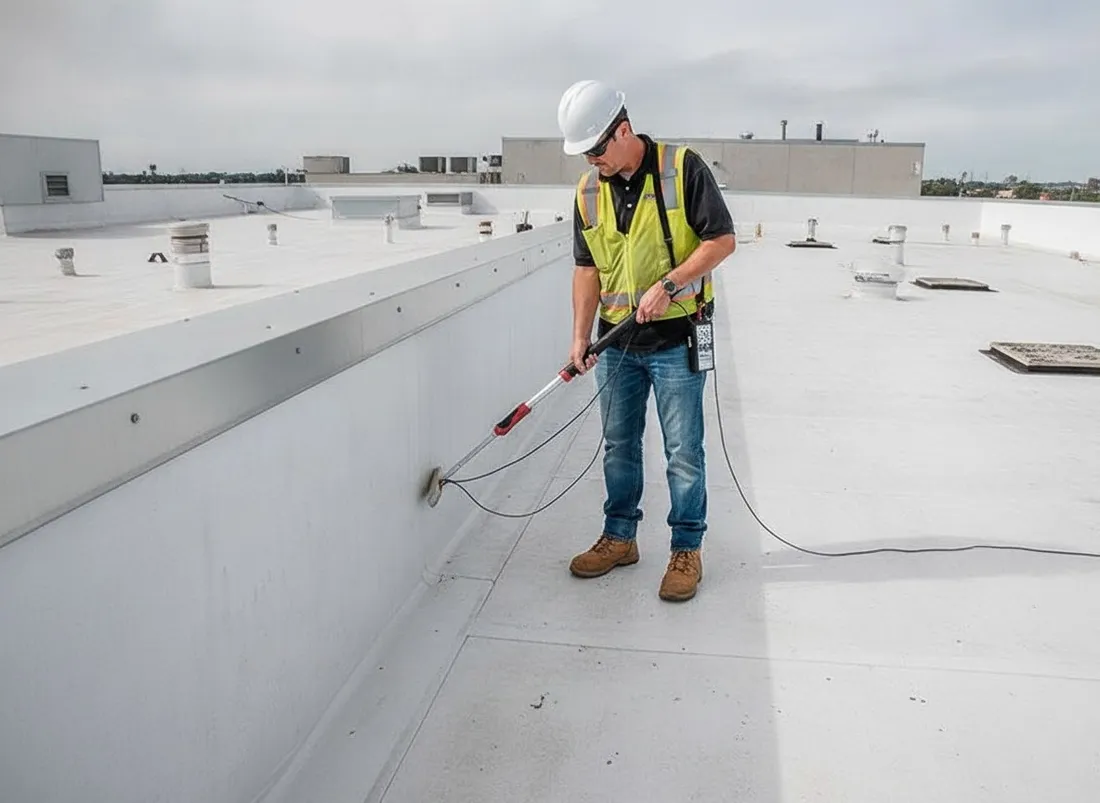
Parapets, upturns, flashings, penetrations: the places roofs actually fail, and the places a wetted test cannot reach. The brush tests vertical surfaces as readily as the field.
Roofs that must stay dry
Occupied interiors below, moisture-sensitive assemblies, or simply no reason to introduce water to a roof being tested for keeping water out. The entire test runs dry.
How the test works, in plain terms
A waterproofing membrane is an electrical insulator. The test puts a low-current signal across it and sweeps the surface with a conductive brush. Wherever the membrane is intact, nothing happens. Wherever it is breached (a puncture, a bad seam, a pinhole, a thin spot), the signal crosses, the detector registers it, and the technician marks the exact point before moving on.
The deliverable is a marked plan of every point where the membrane is compromised, each one photographed, in a report your roofer can work from. Repairs get re-tested to prove they hold.
A wet roof, or a membrane under pavers and vegetation, calls for the other tool: low voltage leak detection. If you are not sure which the roof needs, start at electronic leak detection; both methods are in-house, and the roof decides.
High voltage questions
What is high voltage leak detection?
A dry-surface electronic test, also called spark testing or dry roof testing. A conductive brush sweeps the membrane; at any point where the membrane is breached or thin, the test signal crosses and the detector registers the exact spot. No water is involved at any stage, which is what makes it the most versatile of the electronic methods.
Is high voltage testing safe for the roof and the building?
Yes. Despite the name, the test signal is very low current, comparable in energy to the static shock from a doorknob. It poses no hazard to people, the structure, or building systems, and it does not damage the membrane it tests. The equipment is purpose-built for membrane integrity testing and operated by certified technicians.
When is high voltage the right method instead of low voltage?
When the surface is dry or must stay dry, when the area includes vertical surfaces (parapets, upturns, flashings) that water-based testing cannot reach, and when the target is pinhole-level breaches in a new membrane before it is covered or put in service. If the roof carries overburden or is already wet, low voltage is usually the tool. The roof decides; we carry both.
What does the test find that an inspection cannot?
Breaches too small to see: pinholes, scuffs, and areas of thinned membrane that have not leaked yet. Finding them before water enters the assembly is the difference between a spot repair on a schedule and an investigation after the ceiling stains.
Tell us about the membrane
What it is, whether it is exposed, roughly how big, and what stage the job is at. If the roof needs the wet method instead, that is what you will hear on the first call.