Building Owners & Property Managers
A tenant reports a stain on the ceiling. Two contractors come out, disagree about where the water is entering, and both quote work. Neither quote is wrong exactly, because neither of them knows.
Roofs are the expensive version of this problem, but they are not the only one. Electrical rooms fail without warning, insurers increasingly ask for annual thermal scans before they will renew on the terms you had, and the capital plan you are defending to ownership rests on somebody's estimate of how much life the roof has left.
What changes the conversation is a measurement. Not an opinion from a firm that also sells the fix.
What we run for you
Electronic leak detection
Locates the actual breach rather than the wet spot inside, which is rarely underneath it.
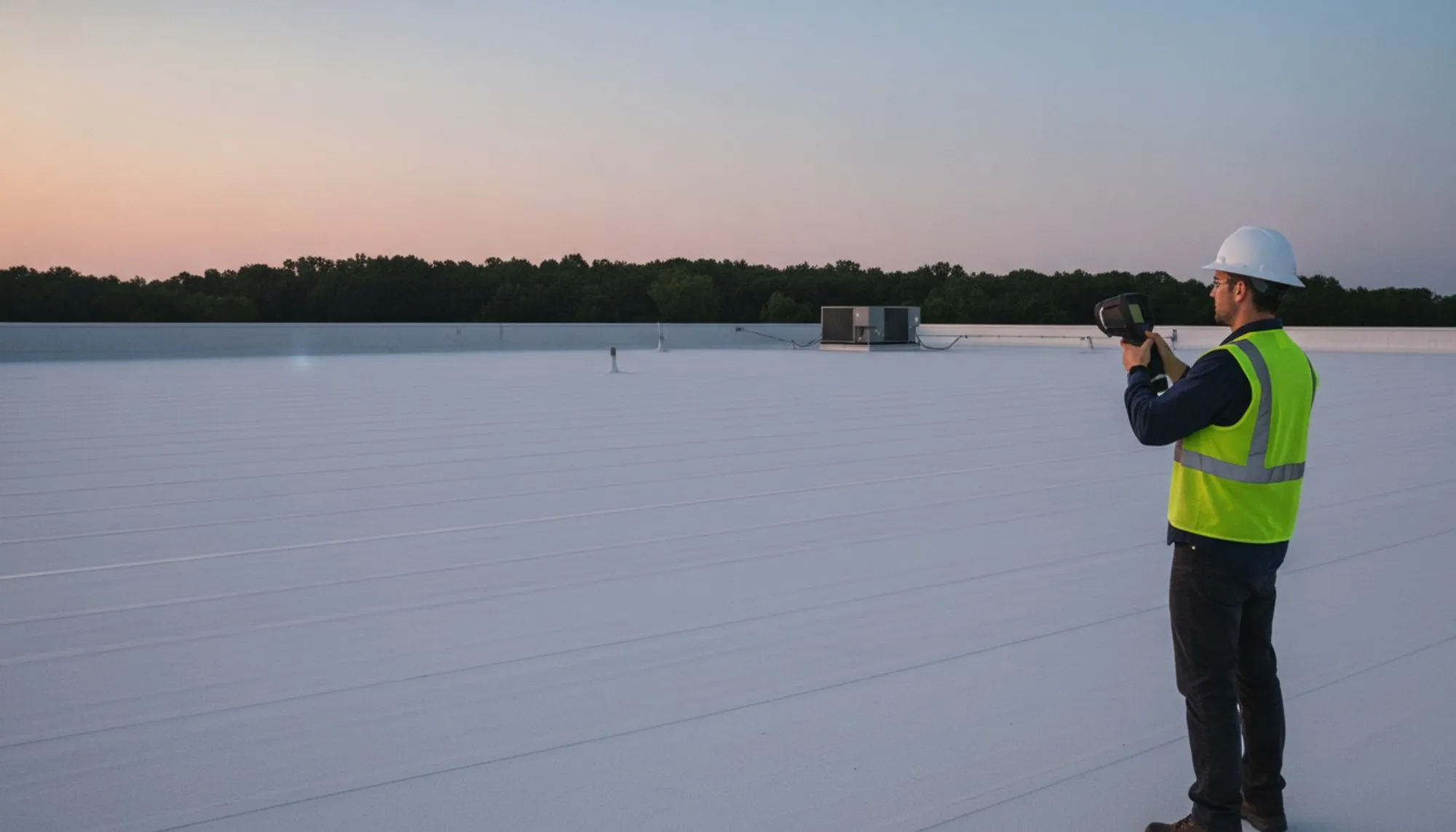
Infrared roof moisture surveys
Maps the wet sections so you replace what failed instead of the whole roof, and can budget against a drawing rather than a guess.
Nuclear roof moisture surveys
Reads moisture through ballast and multiple overlays on the older assemblies in most portfolios.
Infrared electrical inspections
Finds the loose or overheating connection while it is still a repair, and produces the documentation carriers ask for.
What you get
A report with the findings located on a plan, each one photographed, in language you can put in front of ownership or an insurer without translation.
Thermographic electrical surveys follow NFPA 70B, the electrical maintenance standard, and every thermographer is Infraspection Level II or higher.
Questions we hear from building owners & property managers
The roof leaks and two contractors disagree. Who is right?
Possibly neither. The wet spot inside is rarely under the breach, because water travels along the deck before it shows. A test locates the actual entry point, and a moisture survey maps how far the water has already spread.
Do I have to replace the whole roof if part of it is wet?
Usually not. A moisture survey draws the wet areas on a plan, so you replace the sections that failed and keep the sections that did not. The survey is how you find out which is which before committing capital.
My insurer is asking for an infrared electrical inspection. What is that?
A thermal scan of your electrical rooms while everything runs. Failing connections show as heat long before they fail, and the report documents each one with a measured temperature, which is the record your carrier wants to see.