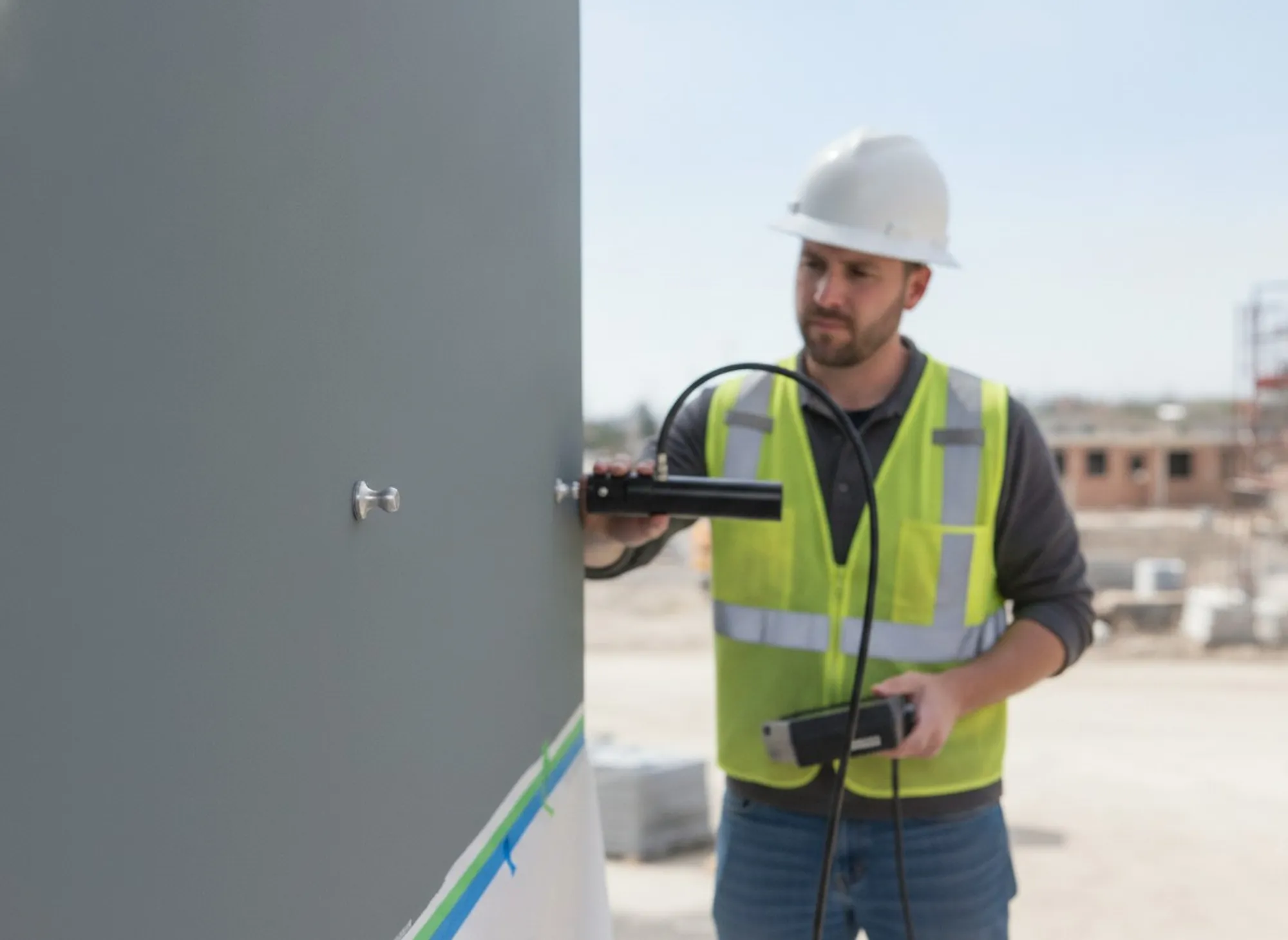
Adhesion pull-off testing
Adhesion pull-off testing puts a number on how well the barrier is stuck. A technician glues a small steel dolly to the membrane, then pulls it with a calibrated hydraulic tester until something gives. The reading is a psi value and a failure mode, recorded on the spot, and it either proves the installation meets the specification or catches the problem before insulation and cladding bury it.
What the test measures
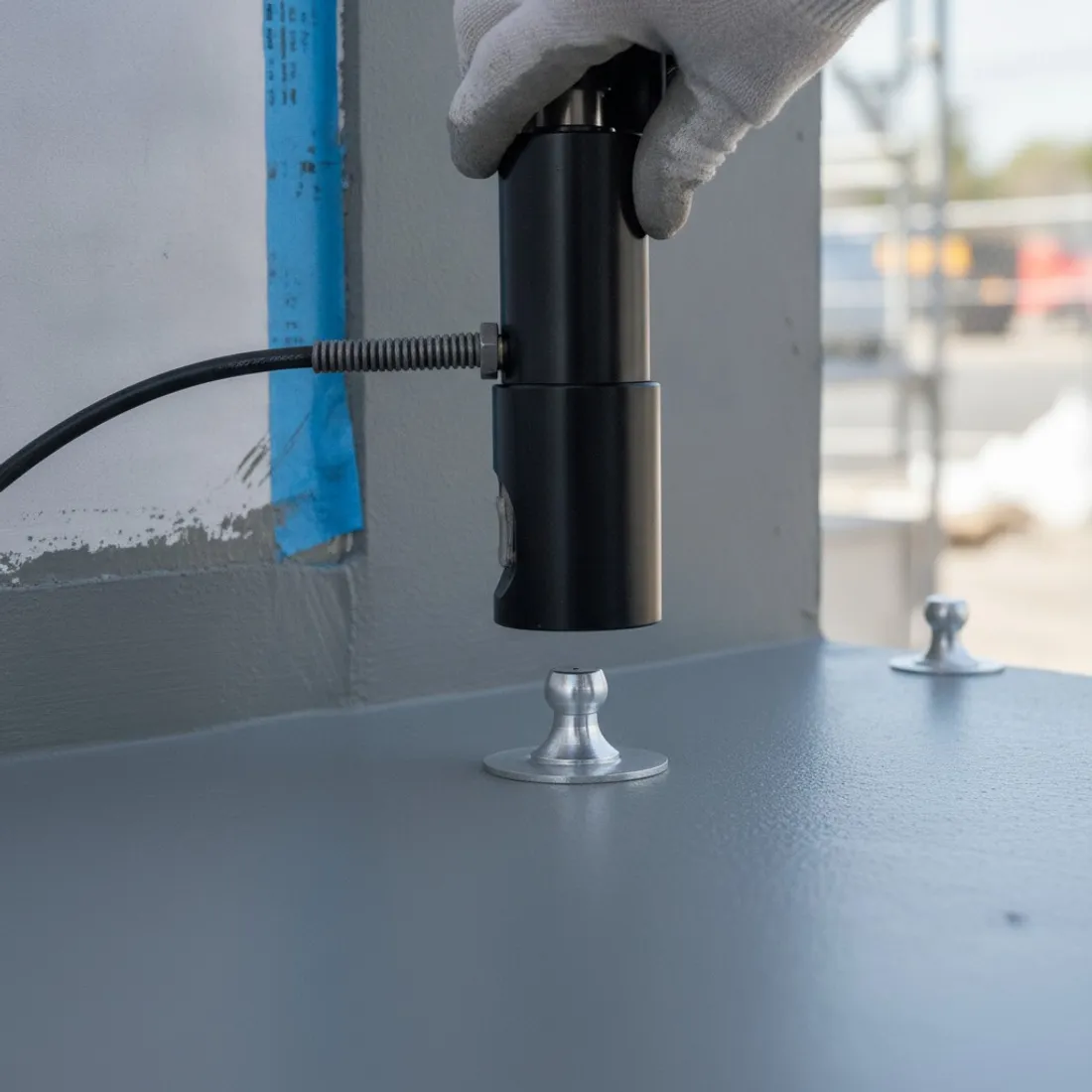
ASTM D4541 defines the procedure: a test dolly is bonded to the AVB surface with high-strength adhesive, allowed to cure, then pulled perpendicular to the surface until it detaches or a specified threshold is reached. The peak reading in psi is half the answer; the failure mode is the other half:
- Adhesive failure: the bond let go between layers or materials.
- Cohesive failure: the membrane or substrate broke within itself.
- Substrate failure: pull-out from the concrete, CMU, or sheathing behind it.
Together they tell the project whether the barrier passed and what to change if it didn't: bad substrate prep, moisture, and cold-weather application each leave a different signature.
Why the numbers matter before the cladding goes on
Warranty and manufacturer requirements
Air barrier manufacturers require documented adhesion results for warranty approval. The report is that documentation.
Codes and commissioning
Energy codes, ABAA requirements, and building commissioning protocols call for bond strength verified in the field, not assumed.
The last cheap moment
A weak bond found while the barrier is exposed is a surface fix. The same bond found after the cladding closes is an investigation.
The test runs on most AVB systems (fluid-applied, sheet, and spray-applied), with cure monitoring for elevated or cold-weather work. It pairs naturally with leak-site testing: bubble gun and smoke pencil find where air gets through; adhesion testing proves the membrane stays attached. Most envelope specifications ask for both; the full family is at building envelope testing.
How a test day runs
- Site evaluation: confirm the AVB is fully cured and accessible.
- Dolly preparation: bond the test dollies with the appropriate adhesive.
- Cure time: product- and condition-dependent, monitored on site.
- Pull test: perpendicular force applied with a calibrated hydraulic tester.
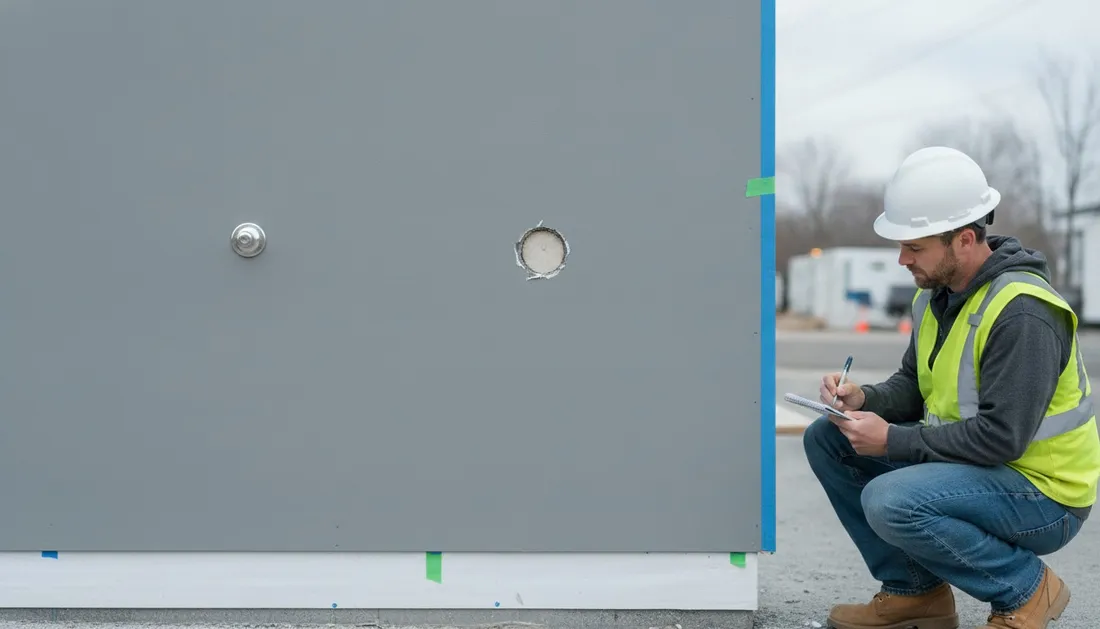
- Data collection: peak psi, failure mode, and membrane thickness recorded per location.
- Reporting: results, photos, and field notes for every test point.
Tell us about the installation
The membrane system, the substrate, the spec's adhesion requirement, and when the barrier gets covered. You will get the test scheduled inside that window, and numbers the warranty file can hold.