Facade Contractors
A facade fails at its transitions. Not in the middle of a panel, but where the barrier meets a window head, a slab edge, a parapet, a penetration that got detailed on site rather than on the drawing.
Those are exactly the places that are hardest to inspect by eye and easiest to argue about afterwards. Once the cladding is on, the only remaining evidence is a wet interior and a set of opinions.
What we run for you
Air & vapor barrier testing
Tests the installed barrier at the transitions where assemblies actually fail, while access still costs an hour instead of a lift and a tear-back.
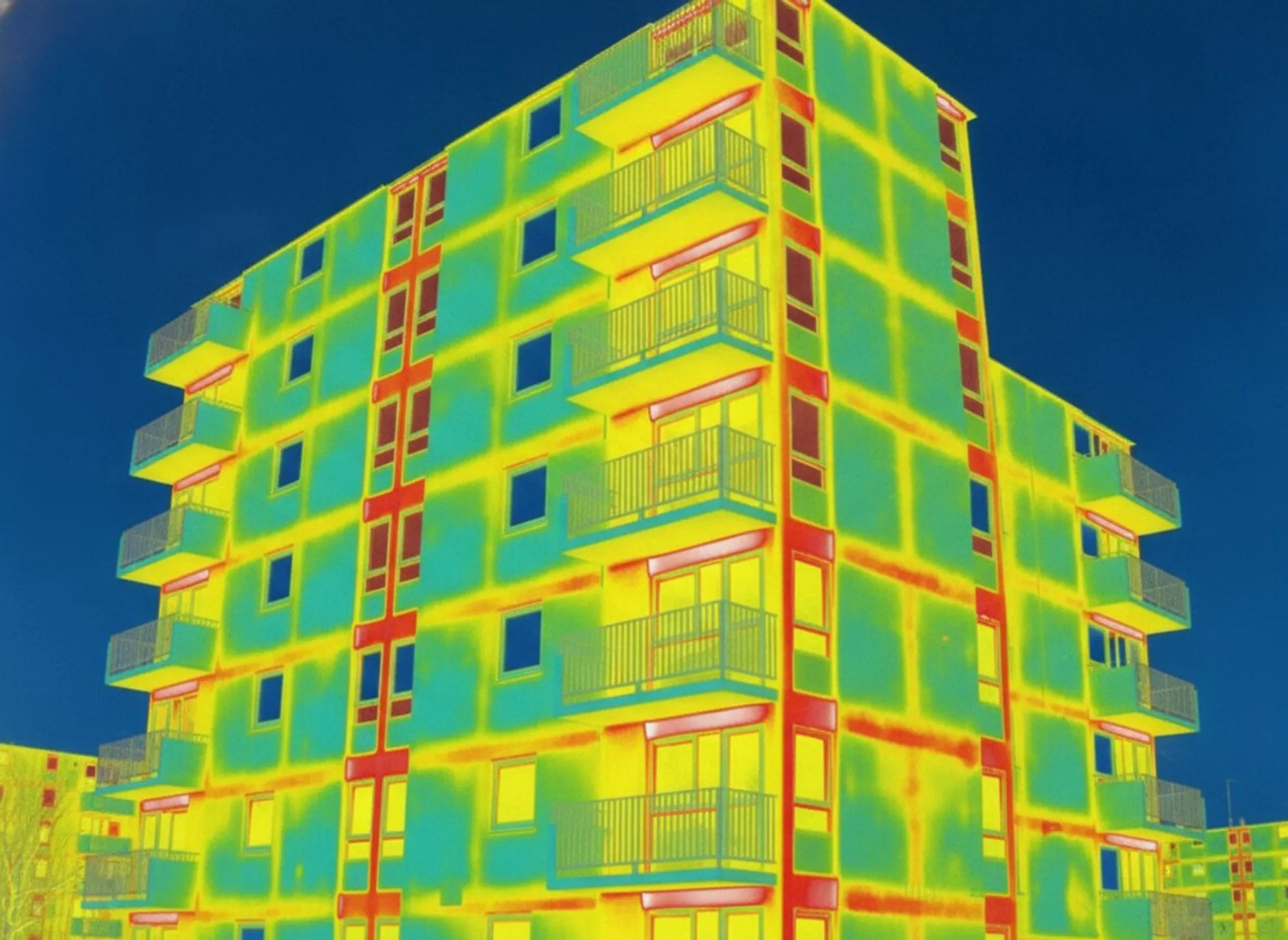
Infrared building envelope testing
Reads temperature across the finished envelope to expose air leakage, missing insulation and wet assemblies without opening anything.
Smoke pencil testing
Portable enough to follow the work, so a suspect detail gets checked the same day rather than added to a punch list.
What you get
A thermal map or marked elevation locating each anomaly, imaged and described, with a pass or fail the project can act on.
Barrier testing runs to ASTM E1186 and ASTM D4541. Where the project manual names a standard, the report cites the same one back.
Questions we hear from facade contractors
Why do facades fail at transitions instead of in the field?
Because the field is one product installed one way, and a transition is two trades meeting at a detail drawn on site. Window heads, slab edges, parapets and penetrations are where continuity breaks, which is why testing concentrates there.
Can you test without holding up the schedule?
Testing follows the work. Smoke and bubble testing are portable enough to check a suspect detail the same day it goes in, so answers arrive while the crew is still on that elevation.
What do we get for the close-out package?
A marked elevation or thermal map with each anomaly located, imaged and described, and a pass or fail per test area. It reads the way the architect expects because it cites the same standards the spec does.