Private locating vs the 811 call
Call 811. It is free, it is required, and it works. Then understand exactly where it stops, because that boundary is where the liability moves onto you.
Where the call stops
What 811 covers
The public distribution network: the utility company’s lines, running to the point of service. Gas to the meter. Power to the transformer or the weather head. Water to the curb stop. Telecom to the demarcation point.
Those get marked, at no cost, by the utilities themselves. That is the whole purpose of the system and it does it well.
What it does not cover
Everything past the meter. On a commercial site that is often most of what is buried: the feed from the meter to the building, the loop out to the site lighting, the gas run to a rooftop unit, the fibre between two buildings, irrigation, fuel lines, the electric to a gate or a sign, and anything a previous owner installed and never drew.
Those lines belong to the property. No utility is coming to mark them, and no one is obliged to.
Who pays when it goes wrong
Strike a marked public line and there is a process, and often shared responsibility. Strike an unmarked private line on private property and it is generally the excavator and the owner sorting it out between them, repair, downtime, and whatever the interruption cost the building.
The cost of locating is small next to a single strike. It is smaller still next to the delay a strike causes on a site with a schedule.
Read the service detail
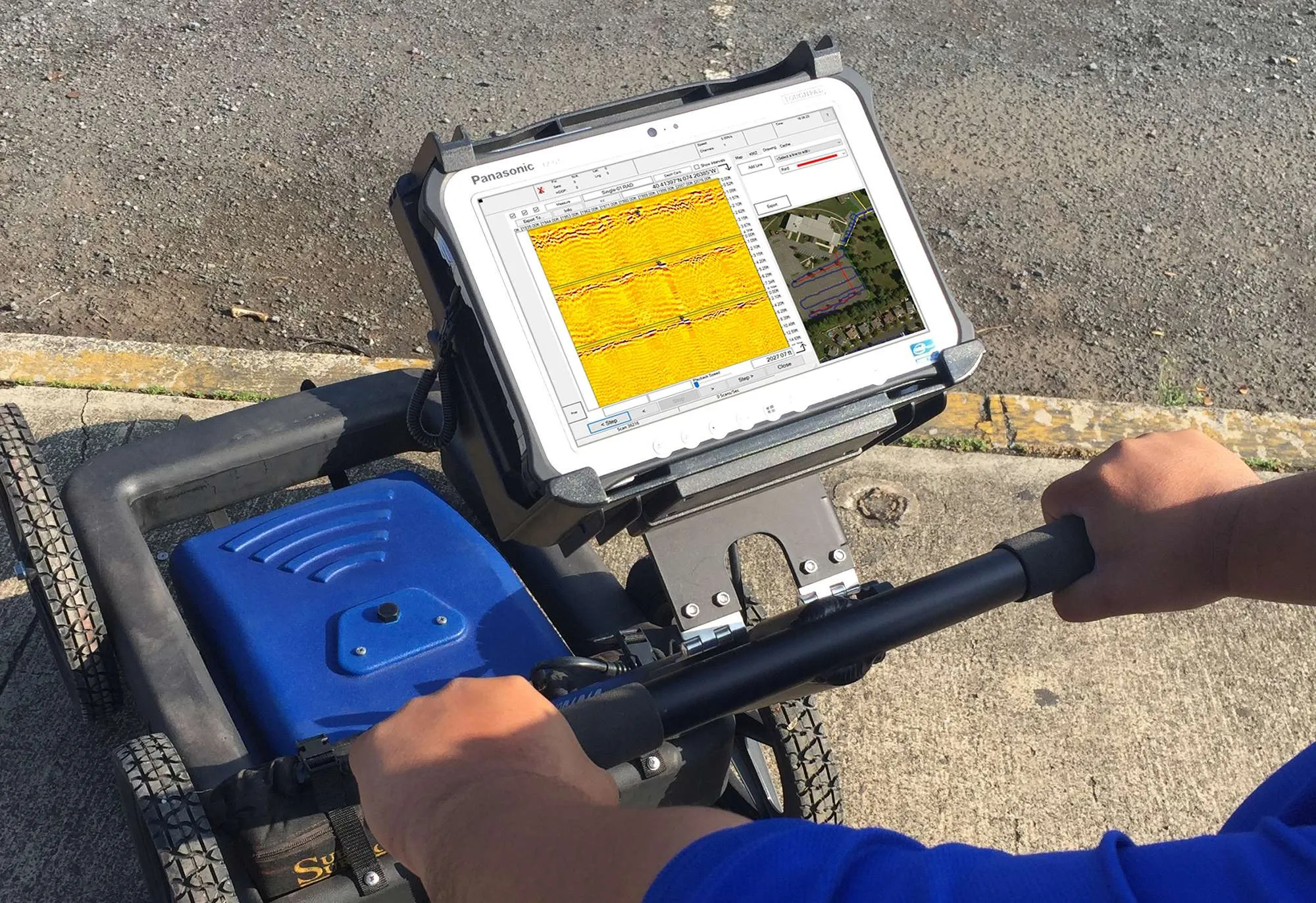
Underground utility locating
The private side found and marked before the excavator arrives.
Concrete imaging & scanning
Rebar, PT cables and conduits located before coring or cutting.
Utility mapping
The locate compiled into drawings the next project can trust.
Tell us about the site
The property, what is planned for it, and what drawings exist. You will get a locating scope matched to the dig.