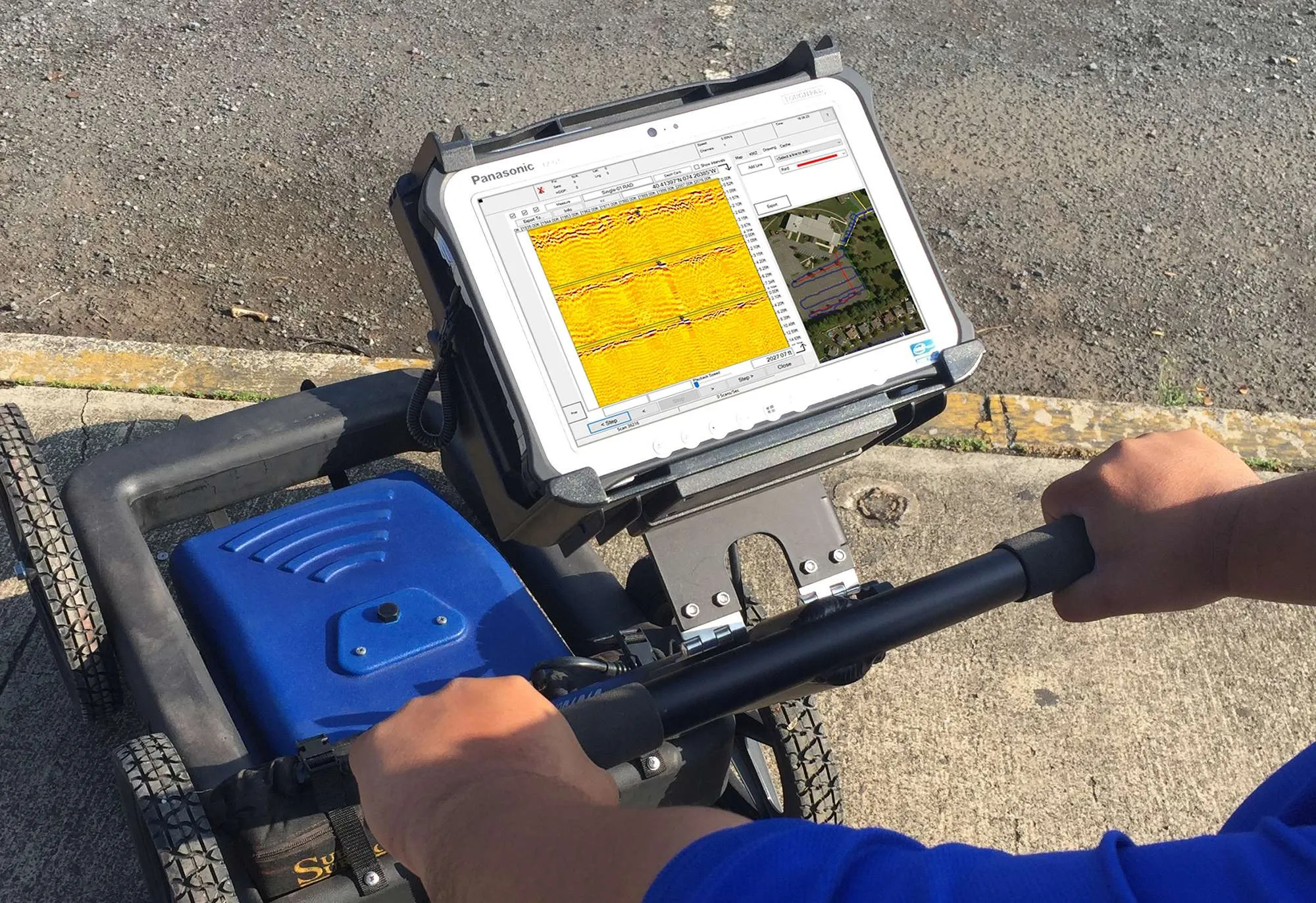
Underground private utility locating
Before the excavator or the auger arrives, we find and mark what is buried: gas, electric, water, communication and sewer lines on the private side of the property, the side the 811 markout never touches. Thousands of miles of buried utilities located so far.
Why the private side is the dangerous side
811 covers the public side; we cover the private side. The free one-call markout stops where utilities cross onto your property, and on a commercial site, most of what is buried lies past that line: the feeders between buildings, the site lighting runs, the fire loop, the abandoned tank nobody remembers. Every year owners and their contractors sever lines they never knew were there, and the bill arrives three ways at once: the repair, the delay, and the liability.
A locate replaces that gamble with marks on the ground and a documented record: GPR and electromagnetic equipment traced across the site, buried lines identified and painted before ground is broken, findings reported so the crew digs where the evidence says it is safe to dig.
The right tool for what you're about to do
Utility mapping
The locate made permanent: detected utilities compiled into site drawings an engineer can design from, instead of paint that washes away.
Concrete scanning
What is inside the slab (rebar, post-tension cables, conduits) before anyone cores or cuts.
Water main leak detection
A buried main losing water, narrowed to a documented indication zone without trench-hunting the whole run.
The whole family lives at subsurface locating, and the boundary question every project asks is answered head-on at private locating vs 811.
Locating questions
Doesn't calling 811 cover this?
811 covers the public side; we cover the private side. The one-call markout stops where utilities enter your property. On a commercial site, most of what is buried is past that point, unmarked, and yours to hit. The full comparison is at private locating vs 811.
What does private utility locating cost?
The drivers are the size of the area to be cleared, how congested the subsurface is, and mobilization. Against the alternative it is not a close call: one severed electric line or fractured sewer main costs more than years of locates, before the schedule delay and before anyone gets hurt. Call with the site size and what is being dug, and you will get a number.
Is a locate a guarantee that nothing is there?
No, and a firm that says otherwise is overselling. Locating is a risk-reduction service: detected utilities are marked on the surface and documented based on the signals available and site conditions on the day. It turns digging blind into digging informed.
What can you find?
Gas, electric, water, communication and sewer lines, using GPR and electromagnetic locating together, plus the harder targets: underground storage tanks, voids and sinkholes. Water lines are often the most challenging, and locating them is its own practiced skill here. What is inside a slab is concrete scanning; a leaking buried main is water main leak detection.
Tell us what's being dug
The site, what the trades are about to do, and any drawings you have, even old ones. You will get which locate the job needs and what it costs, before anyone breaks ground.