Infrared inspections
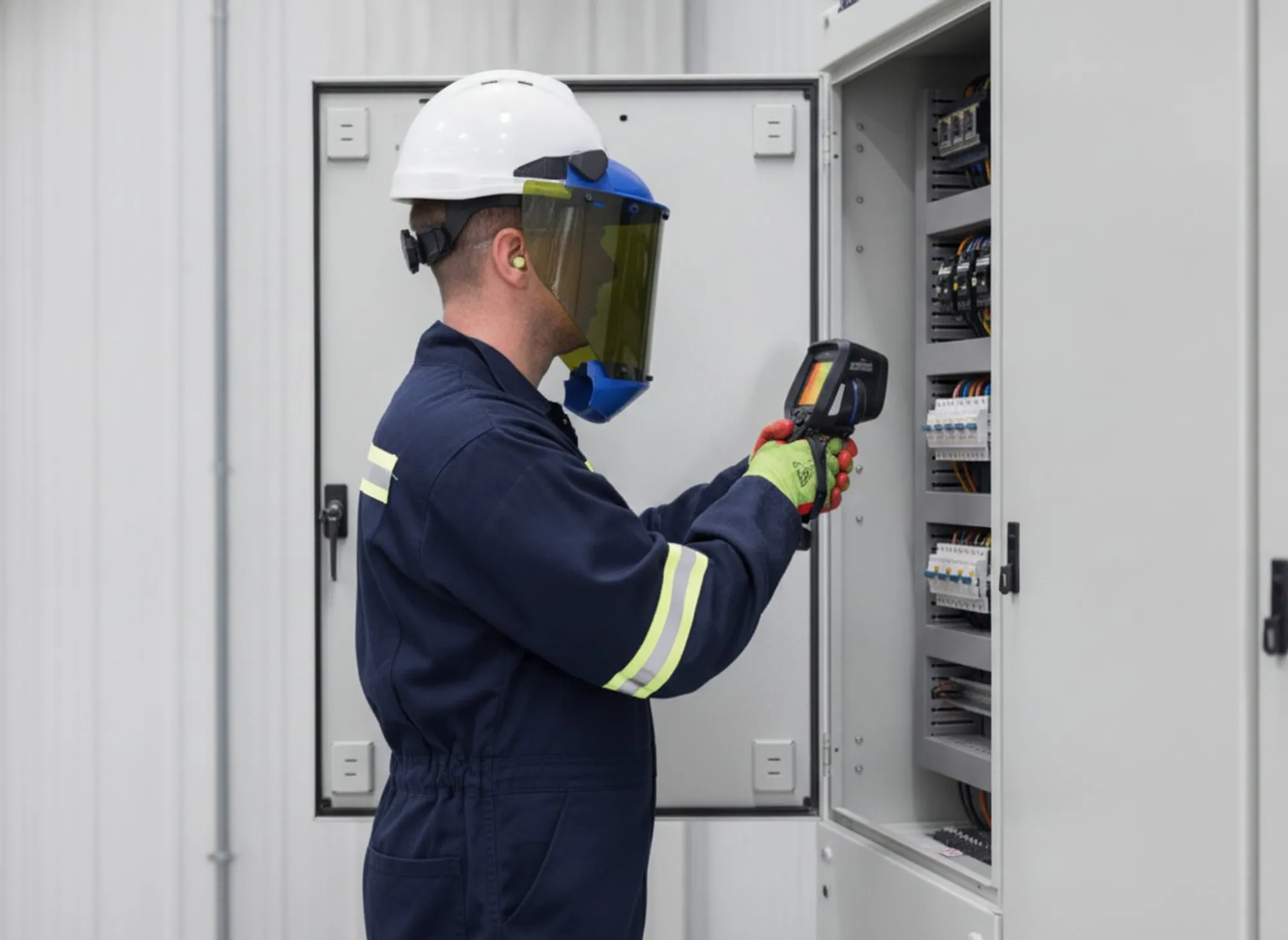
Failures give themselves away as heat before they happen. A certified thermographer reads the signs early: an electrical connection a few degrees hotter than its neighbors, a bearing running dry, a solar string producing nothing while the panels around it work. Everything is scanned under load and documented in thermogram reports that maintenance teams repair from and insurers accept.
Which one your facility needs
Electrical inspections
The annual scan insurers increasingly require: panels, switchgear, transformers and substations read under load per NFPA guidance, so the failing connection is a scheduled repair instead of an outage or a fire.
Mechanical inspections
Motors, bearings and rotating machinery scanned in operation, because friction shows as heat long before failure stops the line. Most facilities pair this with the electrical scan in a single visit.
Solar panel testing
Arrays scanned by handheld camera and by drone: failed panels, strings and connections found from a safe distance, on installations of any size, including commissioning scans while the installer is still responsible.
Looking for moisture in a roof? That is its own discipline; start at infrared roof moisture detection, or see all three moisture methods compared at infrared vs nuclear. Walls and facades are covered under infrared envelope testing.
Why the scan pays for itself
The emergency becomes a work order
Every finding is a failure that got repaired on a schedule instead of at 2 a.m. The outage, the fire risk, and the emergency-rate repair never happen, which is the whole return on one scan.
The insurer stays satisfied
The annual electrical scan is increasingly a condition of property coverage. The report is written to be handed straight to the carrier.
The standard is published
Inspections run to the Standard for Infrared Inspection of Electrical Systems & Rotating Equipment, downloadable with our other documents on the specifications page.
Infrared inspection questions
What does an infrared inspection find?
Heat where heat should not be. A failing electrical connection heats up from resistance, a dry bearing heats up from friction, and a failing solar panel breaks its thermal pattern. All of it is invisible to the eye and obvious to a calibrated thermal camera in the hands of a certified thermographer, and the finding is documented before it becomes an outage, a fire, or a failure.
Why is my insurance carrier asking for an infrared scan?
Because electrical fires announce themselves as heat first. Annual infrared scans of energized electrical systems follow NFPA guidance and are an increasingly common condition of property coverage. The scan report, with each finding documented by thermogram, photo, temperature and location, is the document the carrier accepts.
Does anything get shut down for the inspection?
No, the opposite. Electrical and mechanical faults only show as heat under load, so equipment is scanned in normal operation. The repairs the scan finds are then scheduled for downtime you already planned.
Is roof moisture part of this?
Infrared is one of the roof moisture methods, but moisture surveying is its own discipline with three tools: infrared, nuclear, and impedance. Start at infrared roof moisture detection for the thermal method, or the comparison page for how the three differ.
Tell us about the facility
What the equipment is, roughly how much of it, and what is driving the scan: an insurer's letter, a maintenance program, a solar array underperforming. Electrical, mechanical and solar scans share a visit, so one mobilization usually covers the list.